Water park falls, along with slips at hotel pools and in locker rooms, are common because these places mix constant water, bare feet, and crowds. Here’s how to move through them more safely.
Key takeaways
Key takeaways
– Shared pools and water parks combine constant water, bare feet, crowds, and excitement, all of which raise the risk of falls.
– Locker rooms, showers, stairs to slides, and pool edges are among the slipperiest spots.
– Public aquatic venues are regulated by state and local codes, many based on CDC’s Model Aquatic Health Code, which calls for slip-resistant decks and floors.
– Guests can lower their risk with water shoes, walking instead of running, and using handrails.
Why these places are so slippery
At a backyard pool, a few people share the deck. At a hotel pool or water park, hundreds of wet guests walk the same paths all day. Water is tracked everywhere: decks, stairs, changing rooms, and hallways back to hotel rooms. Most people are barefoot, which offers far less grip than rubber-soled shoes, and children are often running.
Hazard hot spots
Pool decks and edges
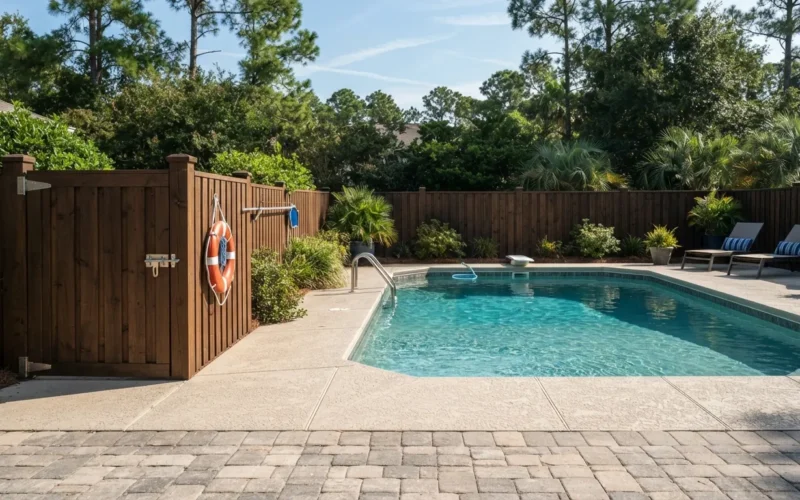
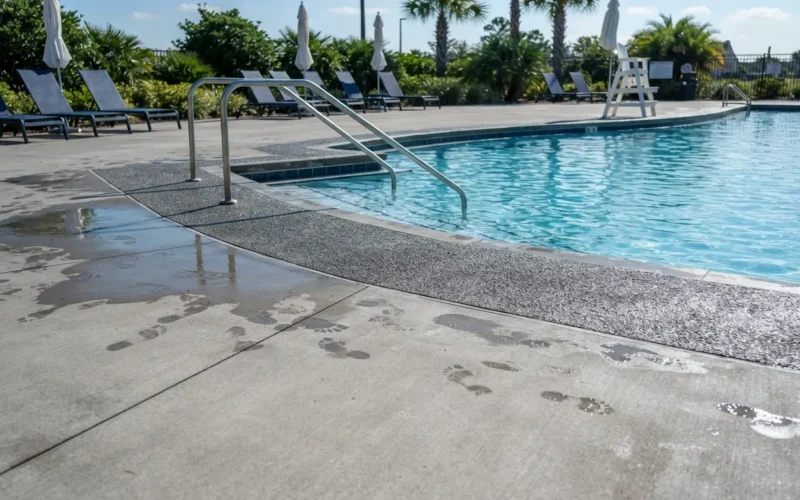
Water splashes onto the deck constantly, and smooth or worn surfaces lose grip. See pool deck slip hazards.
Locker rooms and showers
Shower water, soap, and shampoo combine on tile floors. Benches, bags, and towels add trip hazards in tight spaces.
Stairs and towers to slides
Water parks often have long stair climbs that stay wet all day, with crowds pushing to move faster.
Wave pools and lazy rivers
Entry slopes and steps in moving water can be slippery, especially with algae or uneven surfaces.
Hotel hallways and lobbies
Guests walk dripping wet from the pool to elevators and rooms, wetting hard floors far from the pool area.
Indoor pools
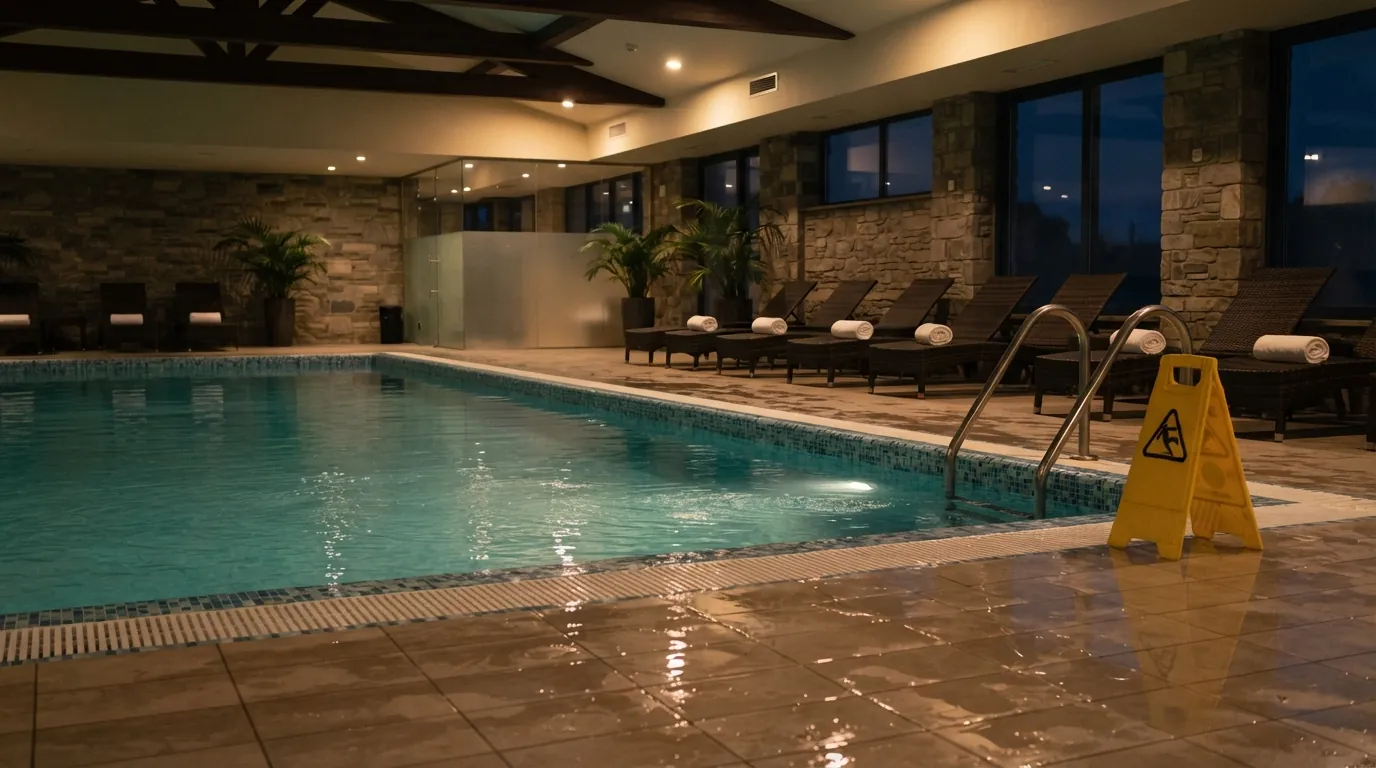
Humidity and condensation keep floors damp, and dim lighting can make wet patches hard to see.
How operators reduce falls
CDC’s Model Aquatic Health Code gives health departments model rules for public aquatic venues, and many state and local codes are based on it. It calls for slip-resistant, textured deck finishes suitable for bare feet, and slip-resistant surfaces on steps and in shallow pool areas. Good operators also:
- choose flooring rated for wet, barefoot areas in decks, showers, and locker rooms (see slip resistance explained),
- keep drainage working and squeegee standing water,
- clean surfaces often to remove algae, soap, and body oils,
- use wet-floor signs in hallways and lobbies near pools,
- place absorbent mats at exits from the pool area,
- provide handrails on stairs and slide towers,
- enforce no-running rules, and
- keep locker room floors clear of bags and benches in walkways.
Our pool area safety checklist gives property managers a full list.
Tips for guests and families
- Wear water shoes or sandals with grippy soles on decks, stairs, and in locker rooms.
- Walk, don’t run, and remind children often.
- Use handrails on every stair and ladder.
- Take smaller steps on wet tile and slopes.
- Dry your feet before walking through hotel hallways and lobbies.
- Watch for shiny, soapy, or slimy patches, especially in showers.
- Keep belongings off the floor in locker rooms.
If someone falls
Help them away from the water first. Falls on hard, wet surfaces can cause head injuries, so watch for danger signs such as a worsening headache, vomiting, confusion, or drowsiness. Tell a lifeguard or staff member right away, and report the fall to management. See common slip-and-fall injuries and what to do after a fall.
Sources
- Centers for Disease Control and Prevention: About the Model Aquatic Health Code
- Oregon Health Authority, Public Pool Program: Slip resistance fact sheet (citing MAHC deck and floor requirements)