Store trip hazards are often things placed on the floor on purpose, like displays, mats, and pallets. Here’s how they cause trips and what retailers and shoppers can do.
Key takeaways
Key takeaways
– In stores, trips are often caused by things placed on the floor on purpose: displays, mats, pallets, and stocking carts.
– Shoppers look at shelves and signs at eye level, not at the floor, which makes low objects easy to miss.
– Mats with curled or bunched edges, low display bases, and fallen merchandise are classic store trip hazards.
– Retailers can prevent most of them with layout rules, mat maintenance, and routine floor checks.
Why stores are full of trip hazards
Stores are designed to catch your eye at shelf level. Promotions, signs, and products compete for attention, while the floor fades into the background. At the same time, the floor is busy with displays, carts, and stock moving in and out.
NIOSH lists loose mats, clutter in aisles, and poor lighting among the risk factors for slips, trips, and falls in retail settings, alongside spills and weather. Many of these hazards are under a store’s direct control.
Common store trip hazards
Floor displays and end caps
Freestanding displays, dump bins, and end-cap extensions can stick out into the aisle. Low bases, feet, and corners are especially easy to catch with a foot or a cart wheel.
Pallets and stocking carts
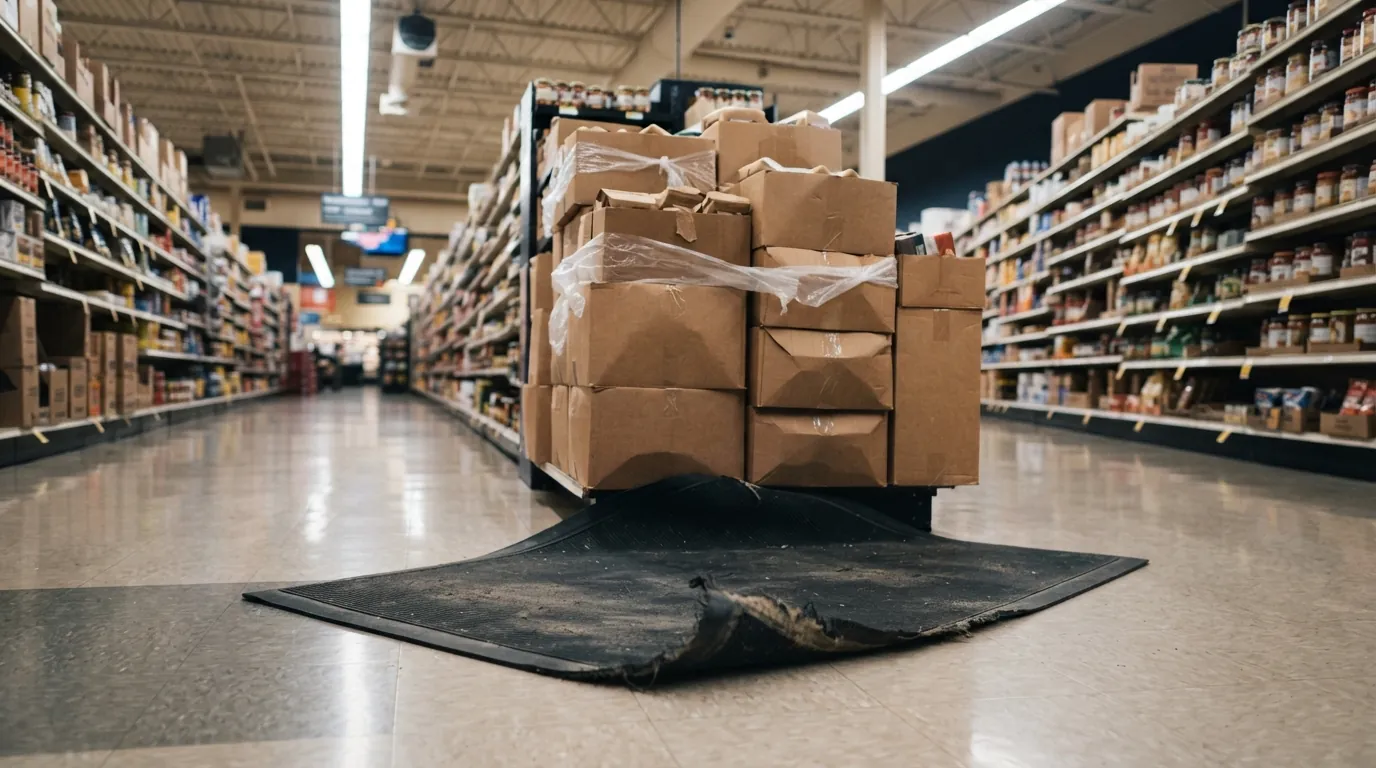
Pallets, flatbed carts, and rolling cages left in aisles during restocking create sudden obstacles, sometimes at ankle height.
Mats and rugs
Entrance mats, anti-fatigue mats at registers, and promotional rugs can curl at the corners, bunch up, or slide. A mat that’s soaked through on a rainy day can also become a slip hazard.
Fallen merchandise and packaging
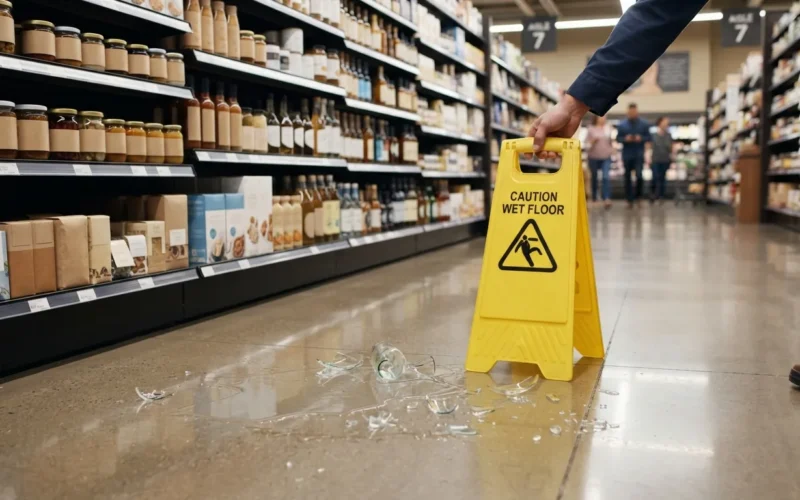
Items knocked off shelves, loose produce, hangers, plastic wrap, and cardboard can lie unnoticed on the floor.
Signs and stands
Sign bases, A-frame signs, sample tables, and rope barriers can narrow walkways or sit in unexpected places.
Cords
Power cords for displays, lighting, and registers that cross walking areas are easy to miss.
Uneven floors
Floor transitions, damaged tiles, ramps, and floor-mounted fixtures left behind after a store reset can catch a toe.
What retailers can do
Plan layouts with walkways in mind
- Keep main aisles at full width, with no displays extending into them.
- Use display bases that sit flush, or mark low bases with contrasting colors.
- Keep promotional displays away from entrances, corners, and checkout lines, where traffic is heaviest.
Manage mats
- Choose mats with beveled, weighted edges and non-slip backing.
- Replace mats that curl, bunch, or slide.
- Use entrance mats long enough for several footsteps, as NIOSH recommends, and swap saturated mats on wet days.
Restock safely
- Restock during quieter hours where possible.
- Keep pallets and carts to one side and never leave them unattended in an aisle.
- Use cones or barriers to block off aisles being worked.
- Clear packaging and debris as you go.
Inspect the floor regularly
Routine floor walks catch fallen merchandise, curled mats, and misplaced carts as well as spills. OSHA requires employers to keep walking surfaces free of hazards and to inspect them regularly, which protects shoppers too.
Cords and power
Use floor outlets or overhead power for displays, and cover any cord that must cross a walking path with a cover made for foot traffic.
Light it well
Make sure aisles and floor-level displays are well lit, with no dark corners.
What shoppers can do
- Glance down when turning corners and passing displays.
- Watch mat edges at entrances and registers.
- Push your cart ahead of you. It can bump an obstacle before your feet do.
- Watch for pallets and stocking carts, especially early and late in the day.
- Tell staff about anything on the floor.
If you trip in a store
Check yourself for injuries, then report the fall to a manager before you leave. Take photos of what caused the trip and note any witnesses. Our guide on what to do after a fall in a store or public place explains each step.
For spills, see grocery store spills.
Sources
- National Institute for Occupational Safety and Health (NIOSH): Preventing slips, trips, and falls in wholesale and retail trade establishments
- Occupational Safety and Health Administration (OSHA): 29 CFR 1910.22, Walking-working surfaces: general requirements