Use this pool safety checklist at the start of each season and regularly after that. It covers the deck, steps, drainage, lighting, fencing, and safety equipment.
Key takeaways
Key takeaways
– A safe pool area starts with the deck: textured, well-drained, clean, and clear.
– Steps, ladders, and handrails need secure fittings and slip-resistant treads.
– A fence at least 4 feet high with a self-closing, self-latching gate is a key layer of protection for young children, according to the CPSC.
– Check the pool area regularly, and after storms or heavy use.
How to use this checklist
Use this list at the start of the season and then regularly, weekly for busy shared pools and monthly for most backyard pools. Public pools follow state and local pool codes, many based on CDC’s Model Aquatic Health Code, so property managers should also check the rules that apply in their area.
Deck surface
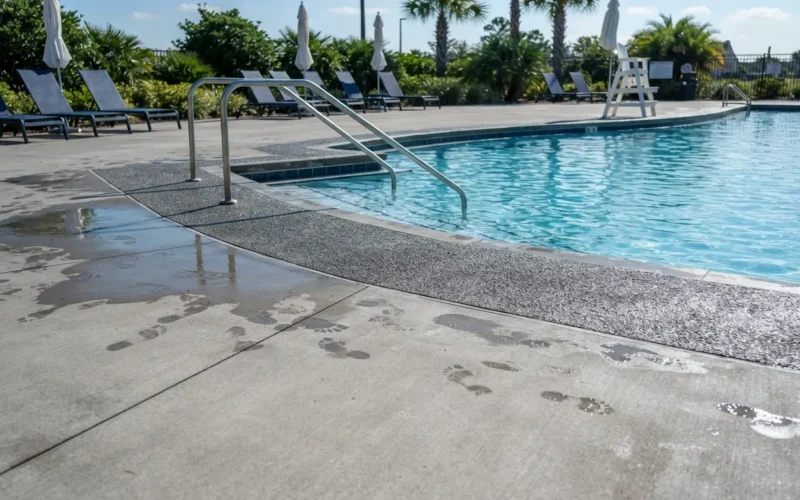
- The deck has a textured, slip-resistant finish suitable for wet, bare feet. The Model Aquatic Health Code calls for slip-resistant, textured deck finishes at public pools.
- There are no smooth, polished, or worn-down patches, especially near the pool edge and steps.
- Sealers or coatings are slip-resistant, not high-gloss.
- There are no cracks, lifted pavers, or trip edges.
- Algae, mildew, sunscreen residue, and body oils are cleaned off regularly.
Our guide to pool deck slip hazards explains why these matter.
Water and drainage
- The deck slopes away from the pool toward drains.
- Drains are clear, and water doesn’t pool in low spots.
- Standing water is squeegeed during busy periods.
- Hoses and splash-out are kept off main walking paths.
Steps, ladders, and handrails
- Pool steps have slip-resistant treads and contrasting edge markings so they’re easy to see.
- Ladders and handrails are firmly anchored and don’t wobble.
- There are no sharp edges or missing bumpers.
- The area around steps and ladders is clear of toys, chairs, and towels.
Walkways and furniture
- There’s a clear walking path around the pool.
- Lounge chairs, tables, and umbrellas are kept back from the edge and out of walkways.
- Food and drinks are kept to a designated area away from the water.
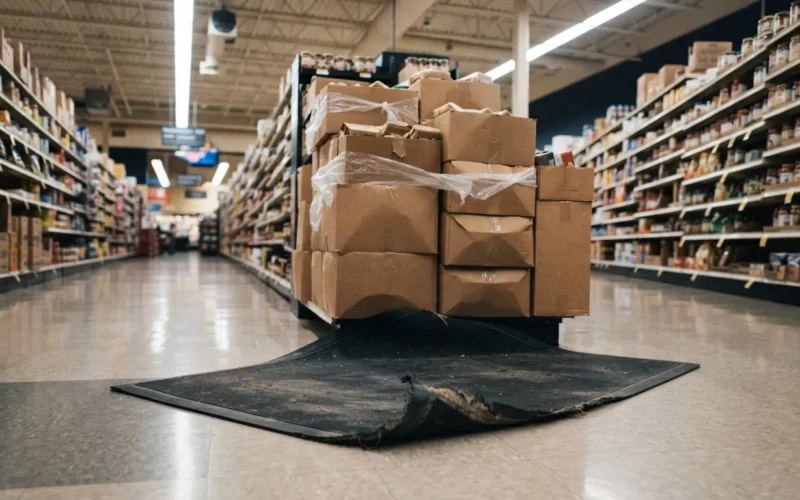
- Mats and rugs, if any, are made for wet areas and lie flat.
Lighting
- The deck, steps, and paths are evenly lit for evening use.
- Burned-out lights are replaced promptly.
- Pool lights and outdoor fixtures are maintained by a qualified electrician.
Fencing and gates
For backyard pools, the CPSC’s safety barrier guidelines recommend:
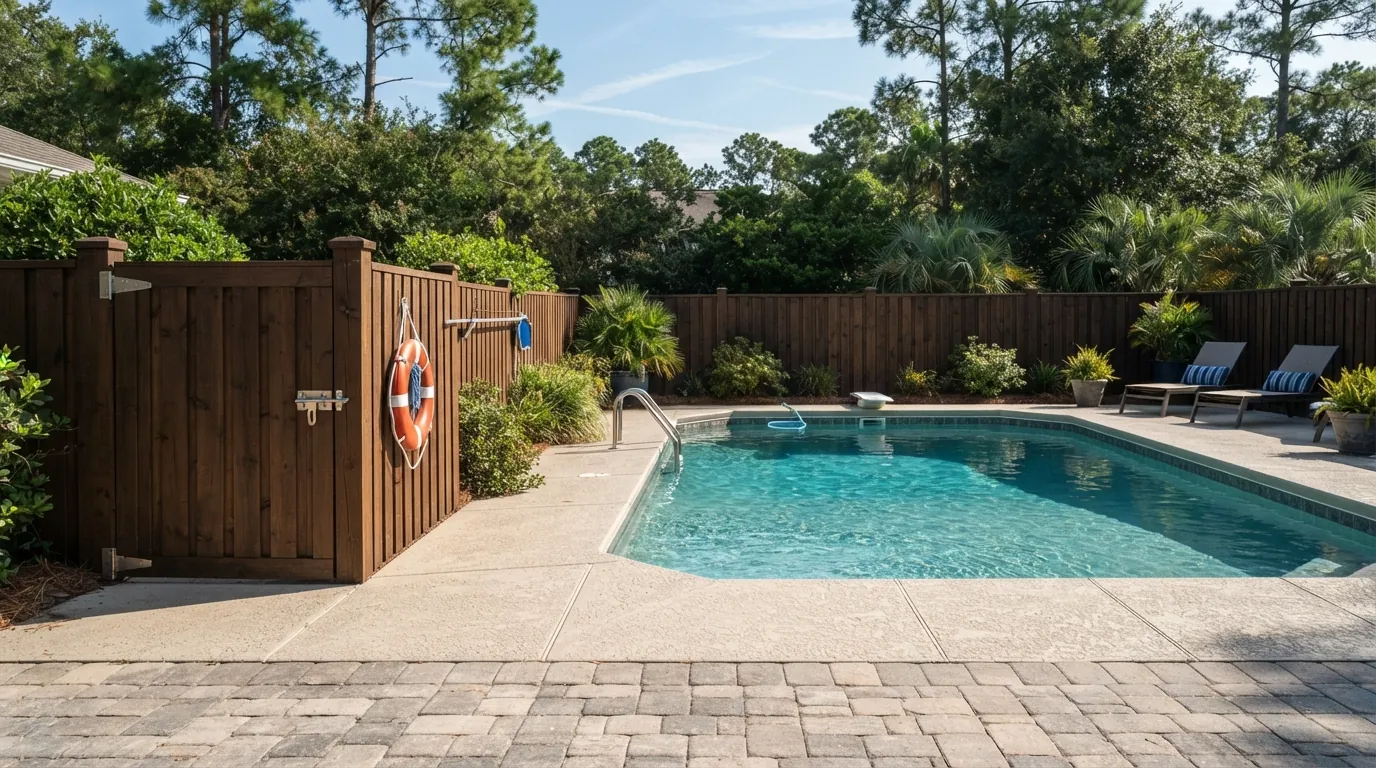
- A fence or barrier at least 4 feet high, and preferably higher, ideally surrounding the pool on all sides.
- Self-closing, self-latching gates that open outward, away from the pool, with the latch out of a young child’s reach.
- No footholds or gaps a child could climb or squeeze through. For example, the CPSC advises that spaces between vertical fence members should not exceed 4 inches.
- Alarms on house doors that lead directly to the pool, if the house forms one side of the barrier.
- Gates are never propped open.
Check your local building and pool codes too, since many set their own barrier requirements.
Safety equipment
- A life ring or reaching pole is mounted where it’s easy to grab.
- A first aid kit and a phone are nearby.
- Pool rules are clear to guests, including no running and no glass on the deck.
Changing rooms and showers (shared pools)
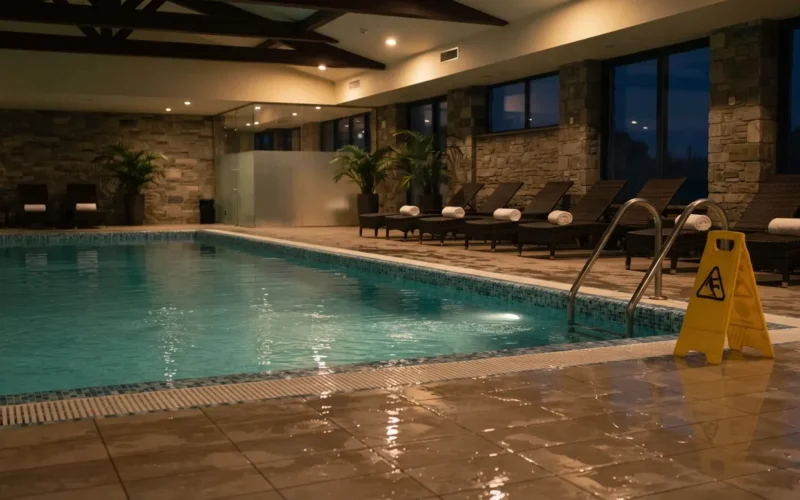
- Floors are slip-resistant and drain well.
- Floors are cleaned and checked frequently.
- Benches are available for changing.
Our guide to falls at hotel pools, water parks, and locker rooms covers shared facilities in more detail.
After a storm or heavy use
- Remove leaves, branches, and debris from the deck.
- Check for standing water and new algae.
- Inspect fences, gates, and latches for damage.
Sources
- U.S. Consumer Product Safety Commission (CPSC): Safety barrier guidelines for residential pools
- Centers for Disease Control and Prevention: About the Model Aquatic Health Code
- Oregon Health Authority, Public Pool Program: Slip resistance fact sheet (citing MAHC deck and floor requirements)