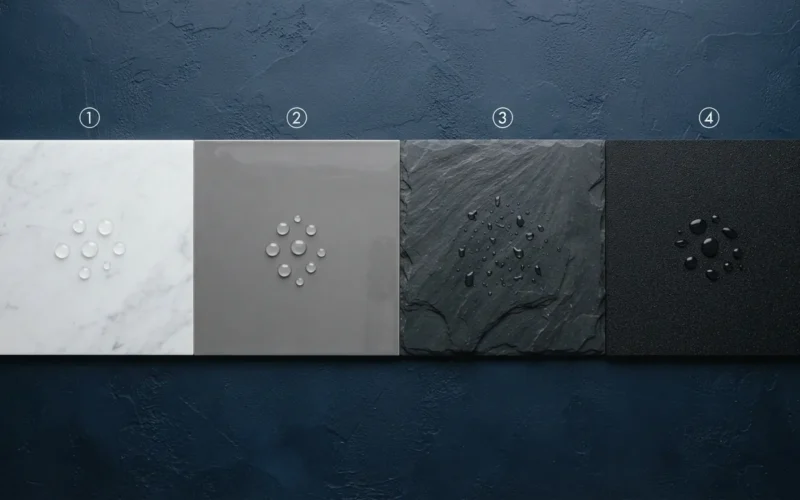
Slip resistance ratings help compare how much grip a floor offers, but they’re easy to misread. This guide explains what the numbers mean and what they don’t tell you.
Key takeaways
Key takeaways
– Slip resistance is usually described with a number called the coefficient of friction. Higher numbers mean more grip.
– In the US, hard flooring like tile is commonly tested with a method called ANSI A326.3, which measures dynamic coefficient of friction (DCOF) on a wet surface.
– Flooring meant for level indoor areas that will be walked on when wet should have a wet DCOF of at least 0.42 under that method.
– A rating describes the flooring under test conditions. It doesn’t guarantee that nobody will slip, and real floors change with wear, cleaning, and contamination.
What “slip resistance” means
Every step relies on friction between your shoe and the floor. Slip resistance is a way of describing how much grip a floor surface offers.
It’s usually expressed as a coefficient of friction (COF): a number that compares the force needed to slide one surface across another with the force pressing them together. Most floor values fall between 0 and 1. The higher the number, the more grip.
Static versus dynamic friction
There are two kinds of friction measurements:
- Static coefficient of friction (SCOF) measures the force needed to start something sliding.
- Dynamic coefficient of friction (DCOF) measures the force needed to keep something sliding once it’s moving.
Slips happen when your foot is already moving, so modern US test methods for hard flooring focus on DCOF.
The ANSI A326.3 test
ANSI A326.3 is the American National Standard test method for measuring the DCOF of hard surface flooring materials, such as tile, stone, and polished concrete. It’s widely used by the tile, stone, and concrete industries.
In simple terms, a small motorized device drags a standardized rubber sensor across a floor sample covered with a water-and-detergent solution and measures the friction.
What 0.42 means
Under ANSI A326.3 and the related tile standard ANSI A137.1, hard flooring that is suitable for level interior spaces expected to be walked on when wet should have a wet DCOF of 0.42 or greater. Flooring with a lower result is meant for areas that stay dry.
The standard also groups flooring by intended use, such as interior dry, interior wet, wetter barefoot areas like pool decks and showers, exterior areas, and areas with oils and grease. For the more demanding categories, manufacturers declare whether a product is suitable.
What the rating doesn’t tell you
ANSI A326.3 itself states that the measurement allows a useful comparison of surfaces but does not predict the likelihood that a person will or won’t slip. That’s because real-world slips depend on much more than the floor:
- what’s on the floor: water, oil, grease, dust, or soap,
- the shoes being worn, and how worn their soles are,
- how fast and in what direction someone is walking,
- slopes and ramps,
- how the floor has been cleaned, sealed, or polished since it was installed, and
- wear over time, which can smooth textured surfaces.
No floor is slip-proof.
Other test methods you may see
- NFSI B101.3 is used to measure the wet DCOF of floors already installed, which helps check how a real floor is performing over time.
- Pendulum testing is common in the UK, Australia, and elsewhere, and uses a swinging arm to measure slip resistance.
- Ramp tests, common in Europe, have a person walk on a tilting ramp to see at what angle they slip.
Numbers from different methods aren’t directly comparable, so always check which test a rating refers to.
Using ratings when choosing flooring
- Ask for wet DCOF results from the manufacturer and confirm they were measured using ANSI A326.3.
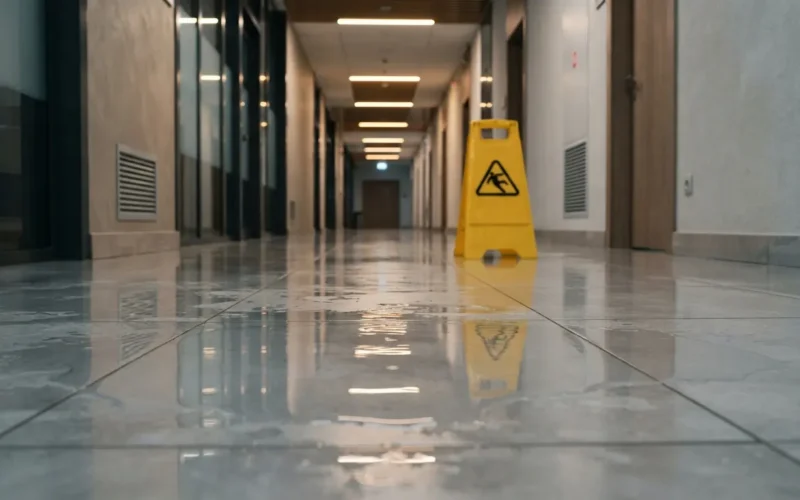
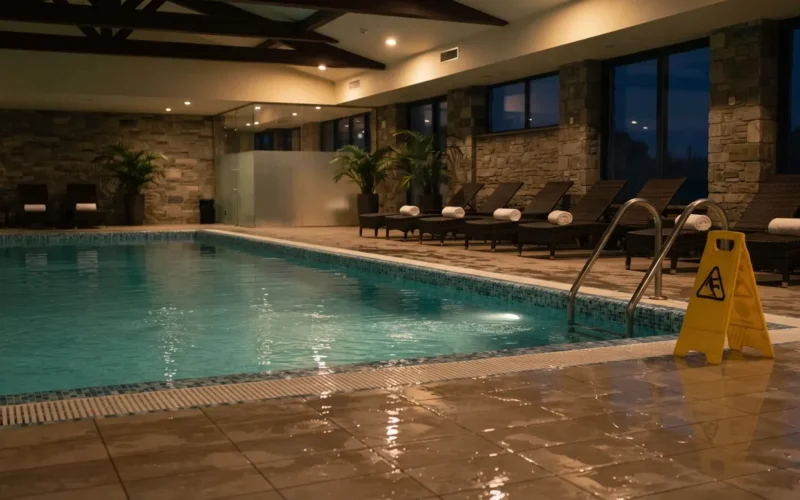
- Match the rating to the use. Entryways, kitchens, and bathrooms need flooring rated for wet use. Pool decks and showers need flooring made for wet, barefoot areas.
- Be careful with “waterproof” products. Waterproof means water won’t damage the floor. It doesn’t mean the surface is slip-resistant when wet. A 2019 report by researchers at Clemson University and the Tile Council of North America, a tile industry group, tested 22 plastic-based flooring products marketed as waterproof or water-resistant and found that 16 had wet DCOF results below 0.42.
- Check the finish. Polished and high-gloss versions of the same material can have very different slip resistance.
- Plan for maintenance. Use cleaners and sealers recommended for the floor, since some can leave slippery residue.
Our guide to the most slippery flooring types compares common materials.
Making an existing floor less slippery
If you’re stuck with a slippery floor, options include:
- anti-slip treatments or coatings suitable for the material,
- slip-resistant mats in wet zones, as long as they lie flat,
- changing cleaning products and methods to avoid residue,
- improving drainage and preventing water from reaching the floor, and
- slip-resistant footwear for workers.
Sources
- American National Standards Institute (ANSI) blog: NFSI B101.3-2022: testing wet DCOF of hard surface walkways
- Sanders and Davidson, Clemson University and Tile Council of North America (2019): Wet slip resistance of plastic based material flooring