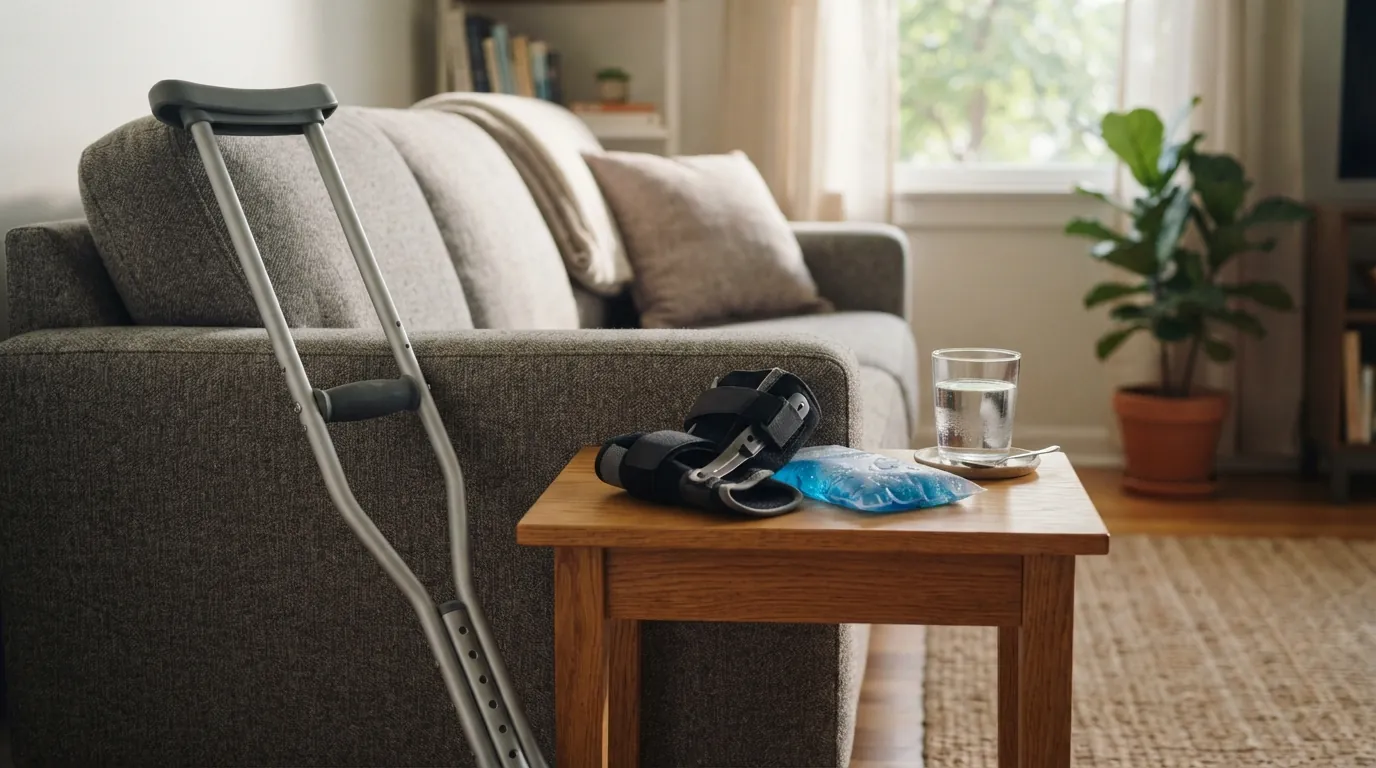
Most falls end with nothing worse than a bruise, but slip and fall injuries can be serious. This guide covers the injuries falls most often cause and the signs that mean it’s time to see a doctor.
Key takeaways
Key takeaways
– Many falls cause no injury, but falls can cause broken bones, sprains, and head injuries.
– After any blow to the head, watch for danger signs such as a worsening headache, repeated vomiting, confusion, or one pupil larger than the other, and get emergency care if they appear.
– Older adults, and anyone taking blood thinners, should see a doctor promptly after a fall that involves hitting their head.
– Some injuries don’t hurt much at first. If pain, swelling, or other symptoms get worse, get checked.
General information, not medical advice. This guide can’t diagnose or treat an injury. If you’ve been hurt, contact a healthcare provider. In an emergency, call 911.
Why falls cause so many injuries
When you slip or trip, your body reacts in a fraction of a second. You twist, reach out to catch yourself, or land hard on a hip, knee, or the back of your head. The surface you land on, how you fall, and your age and health all affect what gets hurt.
Falls are a leading cause of injury in the US, especially for older adults. According to the CDC, about one in four adults age 65 and older reports falling each year, and falls are the leading cause of injury for that age group.
Common slip-and-fall injuries
Sprains and strains
Twisting an ankle, knee, or wrist as you fall can stretch or tear ligaments (a sprain) or muscles and tendons (a strain). Expect pain, swelling, bruising, and trouble putting weight on the joint.
Broken bones
People often break a wrist or arm by putting a hand out to catch themselves. Ankles, hips, and the tailbone are also common fracture sites. Hip fractures are a particular concern for older adults. The CDC reports that most hip fractures in older adults are caused by falls.
Head injuries and concussions
Hitting your head can cause a concussion, a type of mild traumatic brain injury. Falls are the most common cause of traumatic brain injuries in the US. Symptoms may show up right away or over the next hours and days.
Back and neck injuries
Landing on your back or tailbone can cause bruising, muscle strain, or, less commonly, injuries to the spine. Numbness, tingling, or weakness in the arms or legs after a fall needs prompt medical attention.
Cuts and bruises
Falling against edges, steps, or broken glass can cause cuts that may need cleaning or stitches. Deep bruises can be painful for days.
Danger signs that need emergency care
After a bump, blow, or jolt to the head, get emergency care right away if you notice any of these danger signs, based on CDC guidance:
- A headache that gets worse and doesn’t go away
- Repeated vomiting or nausea
- Slurred speech
- Weakness, numbness, or decreased coordination
- One pupil larger than the other
- Unusual drowsiness, or being hard to wake up
- Confusion, restlessness, agitation, or not recognizing people or places
- Seizures
- Loss of consciousness, even briefly
Also call 911 for severe bleeding, a bone that looks out of place, or a fall where the person can’t get up or move normally.
When to see a doctor soon
Even without danger signs, it’s wise to contact a healthcare provider if:
- you hit your head and you’re an older adult,
- you take blood thinners and hit your head, even if you feel fine,
- pain, swelling, or bruising is getting worse rather than better,
- you can’t put weight on a leg or use a wrist or arm normally,
- you have new dizziness, balance problems, or trouble concentrating, or
- you’re worried about how you feel.
The CDC advises that an older adult who falls and hits their head should see a doctor right away to make sure they don’t have a brain injury, because head injuries can be especially serious for people taking certain medicines.
Injuries that show up later
Some injuries feel minor at first because adrenaline masks pain. Concussion symptoms, such as headaches, fogginess, sleep changes, and irritability, may develop over hours or days. Stiffness and soreness often peak a day or two after a fall. Pay attention to how you feel in the days that follow, and get checked if symptoms get worse.
After a fall: protecting your health
- Get checked when in doubt. It’s better to have a provider rule out a fracture or concussion than to guess.
- Follow care instructions. Rest, ice, and limits on activity are common for sprains and concussions, but your provider will tell you what fits your injury.
- Tell your doctor about the fall. Less than half of older adults who fall tell their doctor, according to the CDC. A fall can be a sign of a balance, vision, or medication issue that can be addressed.
- Keep a simple record. Note the date, where you fell, how you felt afterward, and any care you received. This helps your healthcare providers and is useful if you need to report the fall. Our guide on what to do after a fall in a store or public place covers this in more detail.
Preventing the next fall
Many falls are preventable. Start with the places you spend the most time:
- At home, fix trip hazards like loose rugs, cords, and clutter.
- On stairs, use handrails and make sure stairways are well lit.
- Out and about, watch for wet floors and uneven sidewalks.
If you’ve fallen on someone else’s property, our guide to premises liability basics explains how property owners’ responsibilities generally work.
Sources
- Centers for Disease Control and Prevention: Older adult falls data
- Centers for Disease Control and Prevention: Older adult falls facts
- Centers for Disease Control and Prevention: Signs and symptoms of mild TBI and concussion