Bathroom fall prevention is one of the most worthwhile home safety projects, because wet, hard surfaces meet some of the trickiest movements of the day. These are the changes that help most.
Key takeaways
Key takeaways
– Bathrooms combine wet, hard surfaces with movements that challenge balance, like stepping over a tub edge and standing up from the toilet.
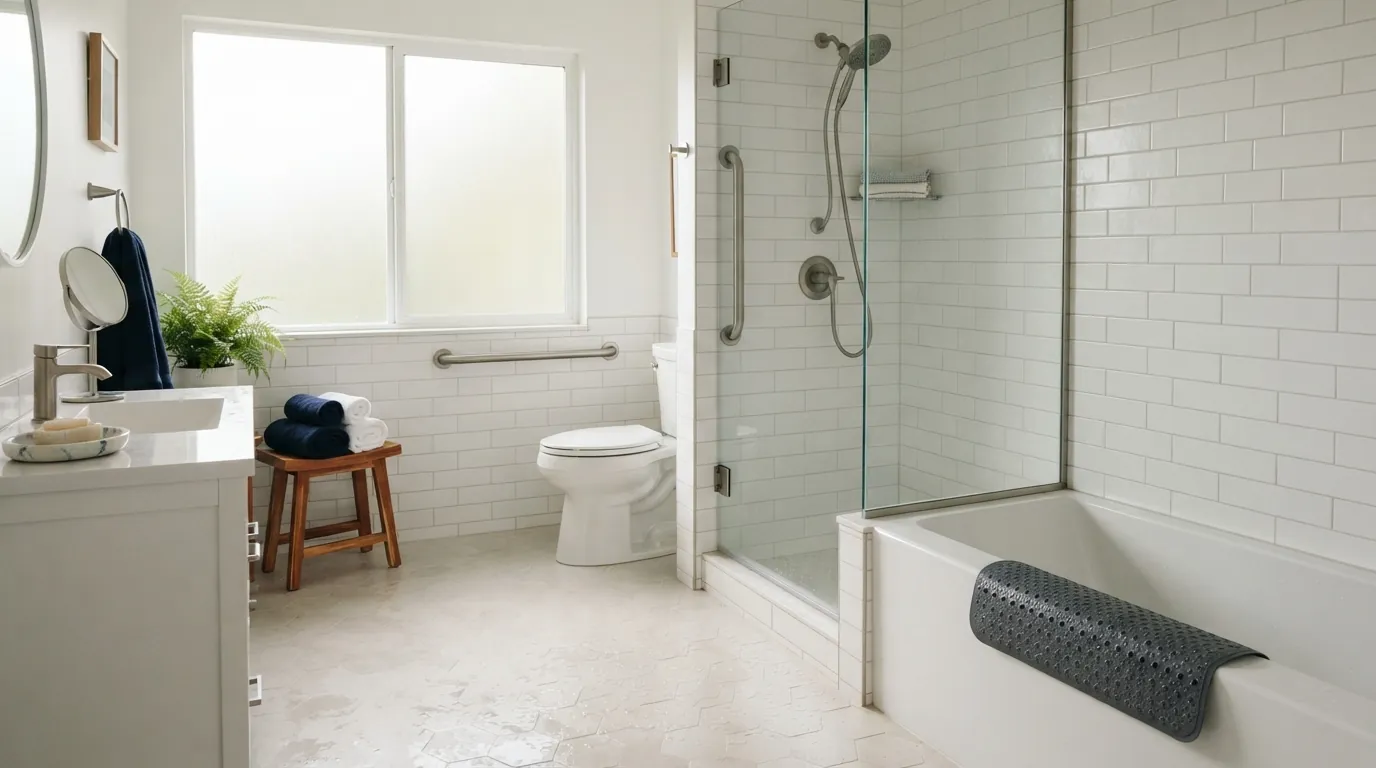
– Grab bars inside and next to the tub or shower, and next to the toilet, are among the most useful changes.
– Non-slip mats or strips in the tub and shower, and a non-slip rug outside it, add grip where feet are wet.
– Towel bars and soap dishes aren’t built to hold your weight. Don’t use them as grab bars.
Why bathrooms are risky
Think about what happens in a bathroom: you step over a tub edge with wet feet, stand on slippery tile, bend, twist, and get up from low seats. You may be tired, without glasses, or moving in the dark at night. For older adults, these moments are some of the riskiest of the day.
The most effective changes
Grab bars
Both the CDC and the National Institute on Aging recommend grab bars inside and next to the tub or shower, and next to the toilet.
- Install them properly. Grab bars must be anchored securely, typically into wall studs or with anchors rated for the purpose. Many people hire a professional.
- Don’t substitute towel bars. Towel bars and soap dishes aren’t designed to hold your weight and can pull out of the wall.
- Place them where you need support: where you step in and out, where you stand to shower, and beside the toilet.
Non-slip surfaces
- Put a non-slip mat or adhesive strips on the floor of the tub or shower. The CDC’s home checklist recommends this.
- Use a non-slip rug outside the tub, or secure a regular bath mat with non-slip backing.
- Replace mats that no longer grip or that curl at the edges.
- Wipe up water on the floor right away.
Lighting
- Keep the bathroom well lit, and use a night light in the bathroom and on the path from the bedroom.
- Make sure the light switch is easy to reach from the doorway.
Seating and height
- A shower chair or tub bench lets you sit while washing.
- A raised toilet seat or one with armrests makes sitting down and standing up easier.
- A handheld shower head helps when you’re seated.
Organization
- Keep soap, shampoo, and towels within easy reach so you don’t have to bend or stretch.
- Keep the floor clear of laundry, scales, and trash cans.
Bigger upgrades
If you’re remodeling, consider:
- a walk-in or curbless shower to avoid stepping over a tub edge,
- slip-resistant floor tile rated for wet areas (see slip resistance explained), and
- a comfort-height toilet.
Habits that help
- Sit to dress and dry off if balance is an issue.
- Take your time getting in and out of the tub or shower.
- Keep a phone within reach, or consider a medical alert device, in case you fall and can’t get up.
- Get up slowly at night, sit on the edge of the bed for a moment, and turn on a light before walking.
For renters
Many landlords allow grab bars, especially if you ask in writing, and some states and local programs help older adults or people with disabilities pay for home modifications. Ask your landlord before drilling into walls.
More home safety
For the rest of the house, see fixing everyday trip hazards at home, and for stairs, safer stairs for older adults.
Sources
- Centers for Disease Control and Prevention (STEADI): Check for Safety: a home fall prevention checklist for older adults
- National Institute on Aging: Preventing falls at home: room by room