Slippery flooring often looks great when it’s dry. This guide explains which floor types tend to get slickest when wet and what to choose instead.
Key takeaways
Key takeaways
– The finish matters as much as the material. Polished, glossy, and heavily sealed surfaces tend to be the most slippery when wet.
– Polished stone, glossy tile, polished concrete, and some plastic-based “waterproof” floors can all become slick with water.
– For wet areas, choose products with a published wet slip-resistance rating suitable for that use.
– Texture, smaller tiles with more grout lines, and matte finishes generally improve grip.
Why some floors are more slippery than others
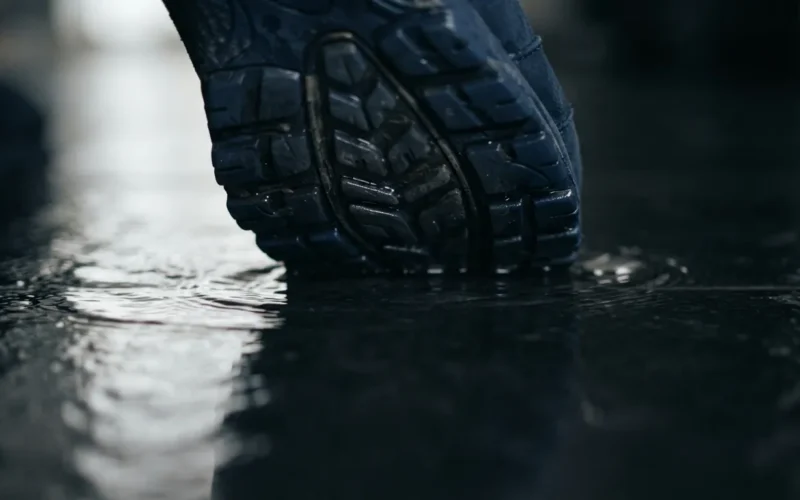
Grip comes from the tiny peaks and valleys on a surface. A rough surface gives water somewhere to go, so your shoe can still touch the floor. A smooth, polished surface lets water spread into a thin film between your shoe and the floor, and grip drops sharply.
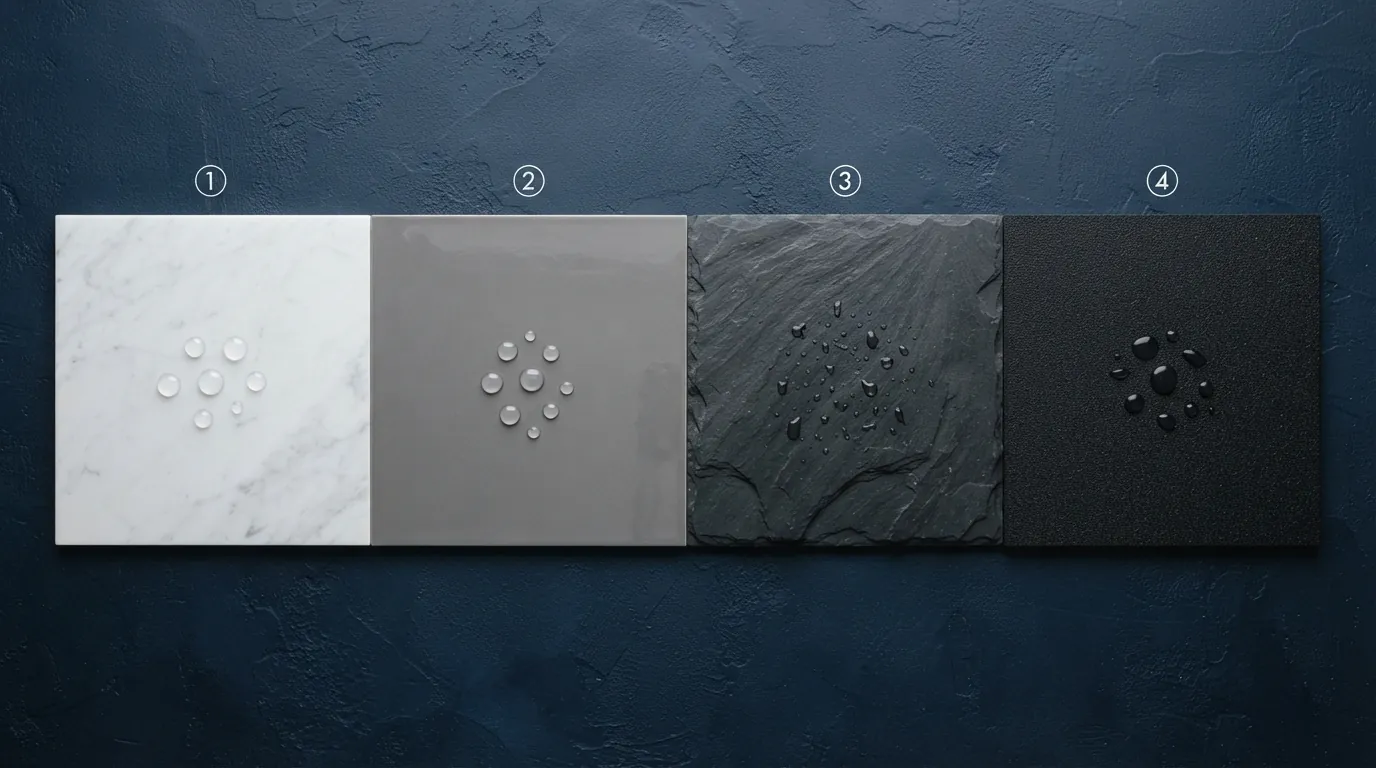
That’s why the same material can be safe or risky depending on its finish. A honed or textured stone tile can grip well, while a polished version of the same stone can be slick when wet.
Floors that tend to be slippery when wet
These are general tendencies. Individual products vary, so always check the manufacturer’s ratings.
Polished marble and stone
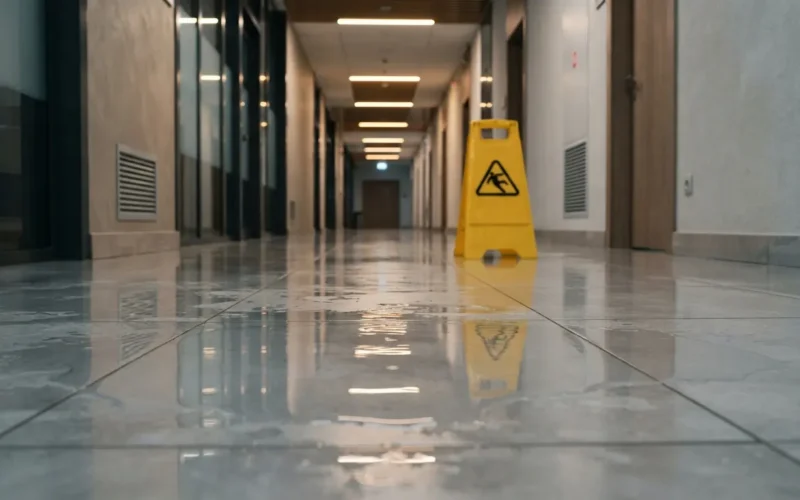
Polished natural stone looks elegant, but its mirror-like finish leaves little texture for grip when wet. It’s often found in lobbies, entryways, and bathrooms, all places where floors get wet.
Glossy ceramic and porcelain tile
High-gloss glazes are smooth and can be slippery when wet. Large-format glossy tiles have fewer grout lines, which also reduces grip.
Polished or sealed concrete
Polished concrete and concrete coated with high-gloss sealer are popular in stores and modern homes. They can be slick with water, oil, or dust.
Some vinyl and plastic-based plank flooring
Many vinyl and other plastic-based products are marketed as waterproof. That means water won’t damage them, not that they grip when wet. A 2019 report by researchers at Clemson University and the Tile Council of North America tested 22 such products and found that 16 had wet slip-resistance results below the common 0.42 benchmark.
Waxed or heavily finished floors
Floor waxes and polishes can make almost any floor more slippery, especially if too much is applied or residue builds up.
Painted wood and smooth hardwood
Painted floors, glossy finishes, and smooth hardwood can be slippery in socks or when wet.
Safer alternatives for wet areas
- Textured or matte porcelain tile with a published wet slip-resistance rating suitable for wet areas
- Smaller tiles, such as mosaics in showers, where extra grout lines add grip
- Honed, flamed, or textured stone instead of polished
- Concrete with a slip-resistant additive in the sealer, or a broom finish outdoors
- Rubber flooring, common in gyms and commercial kitchens
- Slip-resistant sheet vinyl made for wet commercial areas
- Quarry tile in commercial kitchens
How to compare products
- Ask for wet dynamic coefficient of friction (DCOF) results measured with ANSI A326.3. For level indoor floors that will be walked on when wet, look for a wet DCOF of at least 0.42.
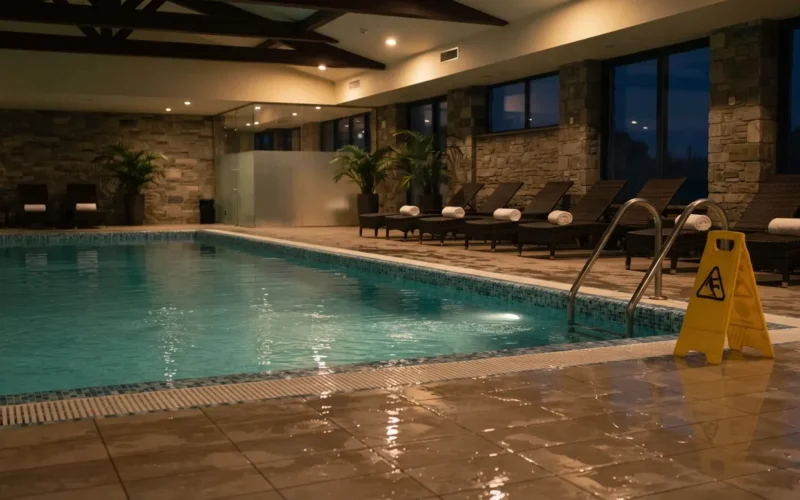
- Match the product’s use category to the room. Areas used with bare feet, like showers and pool decks, and areas with oil or grease need products declared suitable for those conditions.
- Check the finish name. Matte, honed, textured, or “slip-resistant” versions of a product can perform very differently from glossy or polished ones.
- Remember that ratings describe test conditions. No floor is slip-proof, and real-world grip changes with wear and cleaning.
Our guide to slip resistance explained covers the ratings in more detail.
If you already have a slippery floor
- Change how you clean. Use the cleaner recommended for the floor, rinse well, and avoid products that leave a film.
- Strip built-up wax or polish and consider a slip-resistant finish.
- Apply an anti-slip treatment made for your floor type, following the manufacturer’s directions.
- Use slip-resistant mats at sinks, tubs, and entries, as long as they lie flat.
- Control water with longer entrance mats and prompt cleanup. See why wet floors cause so many falls.
For bathrooms specifically, see bathroom fall prevention.
Sources
- Sanders and Davidson, Clemson University and Tile Council of North America (2019): Wet slip resistance of plastic based material flooring
- American National Standards Institute (ANSI) blog: NFSI B101.3-2022: testing wet DCOF of hard surface walkways