Premises liability decides who is responsible when someone is hurt by an unsafe condition on another person’s property. Here’s how it generally works in the US, in plain language.
Key takeaways
Key takeaways
– Property owners in the US generally must take reasonable care to keep their property safe for people who are allowed to be there.
– What “reasonable care” requires depends on the situation and, in many states, on why the visitor was on the property.
– A visitor’s own carelessness can reduce a claim, and in a handful of jurisdictions it can block one entirely.
– Rules and deadlines vary by state, so a licensed attorney in your state is the right person for advice about a specific fall.
General information, not legal advice. This guide describes how premises liability generally works in the United States. Laws differ by state. For advice about your situation, talk to a licensed attorney in your state.
What premises liability means
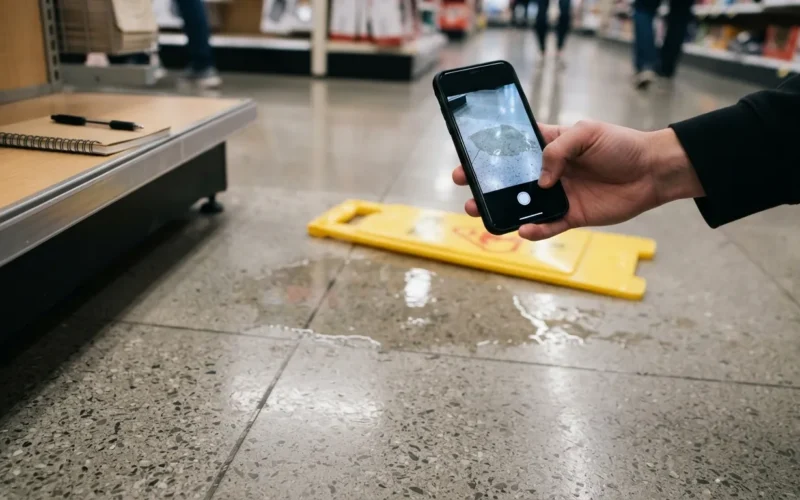
Premises liability is the area of law that deals with injuries caused by unsafe conditions on someone else’s property. Think of a spill in a grocery aisle, a broken step in an apartment building, or an icy walkway outside an office.
The basic idea is simple: people who own or control a property have some responsibility to keep it reasonably safe for the people who come onto it. Premises liability cases are a type of negligence claim, so they usually turn on whether the owner acted reasonably given what they knew, or should have known, about a hazard.
That responsibility has limits. Property owners aren’t expected to guarantee that nobody will ever get hurt, and not every fall on someone else’s property means the owner did something wrong.
Why the visitor’s reason for being there matters
Many states traditionally sort visitors into three groups. The owner’s duty is different for each:
- Invitees are people invited onto the property for a business purpose or because it is open to the public, such as shoppers in a store. They are generally owed the highest level of care, which usually includes inspecting for hidden hazards.
- Licensees are people allowed on the property for their own purposes. Social guests are the classic example. Owners generally must warn them about known hazards that aren’t obvious.
- Trespassers are on the property without permission. Owners generally owe them much less, though many states have special rules that protect children who wander onto property.
Not every state uses these categories. In 1968, the California Supreme Court replaced them with a single question: did the owner use reasonable care toward anyone on the property? A number of other states have since dropped some or all of the categories, while others still apply them. This is one of the main reasons the answer to “who is responsible?” depends on where the fall happened.
What “reasonable care” usually involves
For businesses and property managers, reasonable care tends to come down to three things:
- Inspecting the property often enough to find hazards. A busy grocery store usually needs more frequent checks than a quiet office lobby.
- Fixing hazards within a reasonable time once they’re found, such as mopping a spill or repairing a loose handrail.
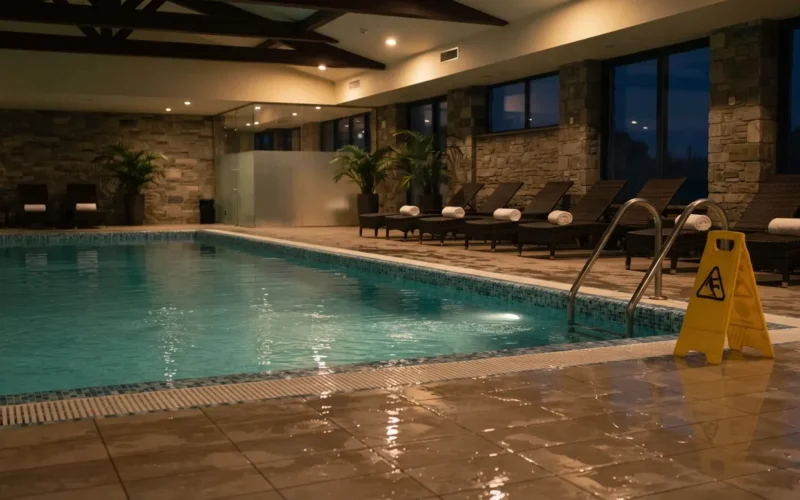
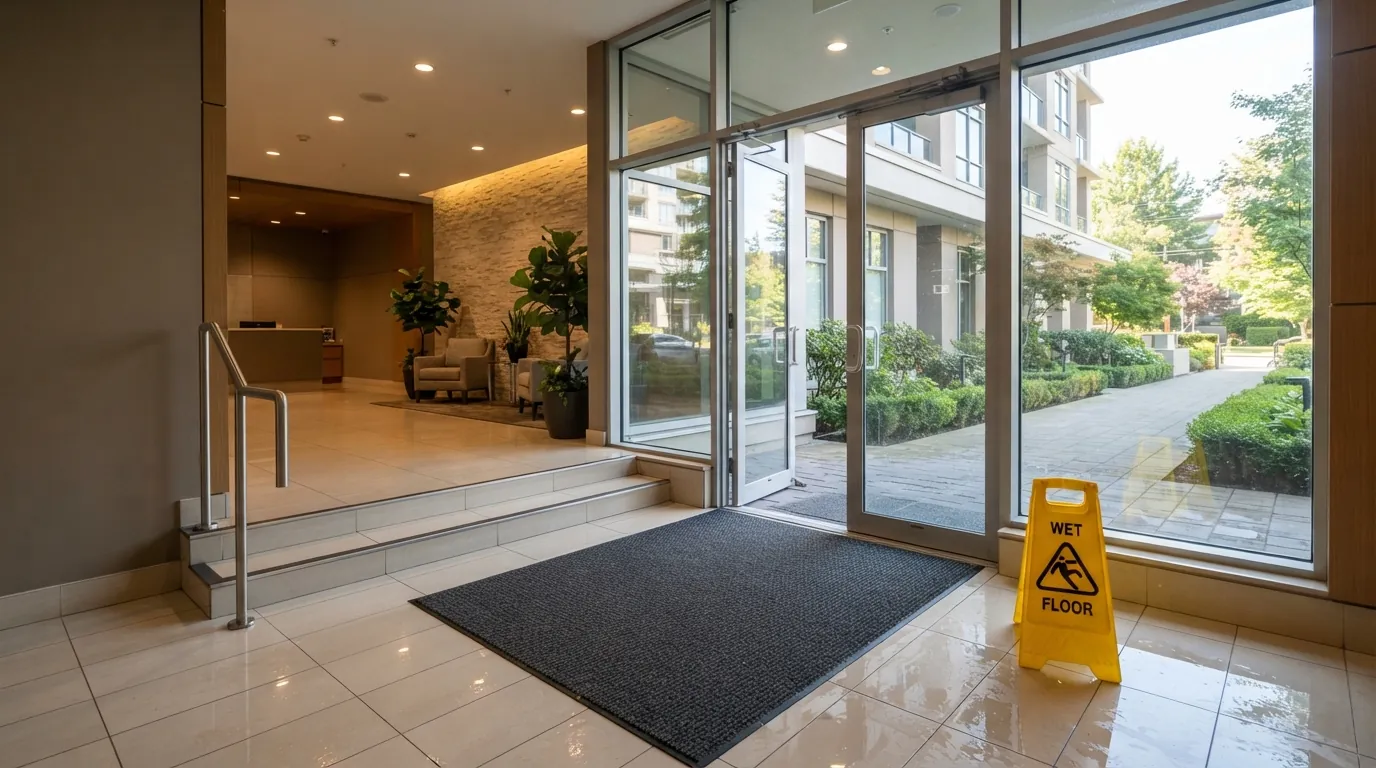
- Warning visitors about hazards that can’t be fixed right away, for example with a wet-floor sign, a cone, or by roping off an area.
What counts as “reasonable” depends on the circumstances: the type of property, how many people use it, the weather, and how long the hazard was there.
Knowing about the hazard
A key question in many cases is whether the owner knew, or should have known, about the hazard. Lawyers call this notice.
- Actual notice means the owner or an employee knew about the hazard. For example, a customer reported the spill to a cashier.
- Constructive notice means the hazard existed long enough, or obviously enough, that a reasonable inspection would have found it. A puddle with shopping-cart tracks running through it is a common example.
If a hazard appeared moments before a fall and nobody could reasonably have known about it, an owner may not be responsible.
Open and obvious hazards
In many states, owners have a reduced duty, or sometimes no duty, to warn about hazards that are open and obvious, such as a large, clearly visible hole. The reasoning is that visitors can be expected to see and avoid them. States handle this idea differently, and some treat it as one factor among many rather than a complete defense.
When the visitor shares the blame
What if the visitor was partly responsible, for example by walking past a clearly marked wet-floor sign while looking at their phone? States handle shared fault in different ways:
- Pure comparative negligence: a visitor’s recovery is reduced by their share of the fault, whatever that share is.
- Modified comparative negligence: recovery is reduced by the visitor’s share, but blocked entirely if their share reaches a set threshold, usually 50% or 51%. Most states use a version of this rule.
- Contributory negligence: a visitor who is even slightly at fault may recover nothing. Only Alabama, Maryland, North Carolina, Virginia, and the District of Columbia still follow this stricter rule.
Deadlines vary by state
Every state sets a deadline, called a statute of limitations, for filing an injury claim. The deadline differs from state to state, and claims involving government property, such as a city sidewalk or a public building, often have extra notice requirements with much shorter timelines. If you’re thinking about a claim, find out the deadline early.
Who may be responsible
The “owner” isn’t always the only party involved. Depending on the situation, responsibility may rest with:
- the property owner,
- a tenant or business that controls the space,
- a property management company,
- a contractor hired for cleaning, snow removal, or maintenance, or
- a city or other government body, for public property.
Leases, contracts, and local rules often decide who was responsible for a particular area.
What property owners can do
If you own or manage property, the same principles point to simple habits that reduce falls:
- Set a regular inspection routine, and inspect more often in bad weather and busy periods.
- Clean up spills promptly and use wet-floor signs until floors are dry.
- Fix loose mats, damaged flooring, broken steps, and poor lighting quickly.
- Keep simple records of inspections, cleaning, and repairs.
Our guides on why wet floors cause so many falls and the most common stair hazards explain what to look for.
What to do next
If you’ve fallen, start with your health. Our guide to common slip-and-fall injuries and when to see a doctor explains warning signs to watch for. Then see what to do after a fall in a store or public place for practical steps such as reporting the fall and keeping a record.
For advice about a specific situation, including deadlines, talk to a licensed attorney in your state.
Sources
- Legal Information Institute, Cornell Law School: Invitee
- Legal Information Institute, Cornell Law School: Comparative negligence
- Legal Information Institute, Cornell Law School: Contributory negligence