Wet floor hazards are behind a large share of everyday slips, in stores, offices, kitchens, and homes. Here’s why wet floors are so slippery and how to spot the risk before you step on it.
Key takeaways
Key takeaways
– Slips happen when there isn’t enough friction between your shoe and the floor. Water and other liquids reduce that friction.
– Smooth, polished surfaces become much more slippery when wet, and thin films of water can be almost invisible.
– Entrances on rainy days, kitchens, bathrooms, and freshly mopped areas are common trouble spots.
– Slowing down, taking shorter steps, and wearing shoes with good tread lower your risk. Owners can help with mats, prompt cleanup, and warning signs.
Why wet floors are so slippery
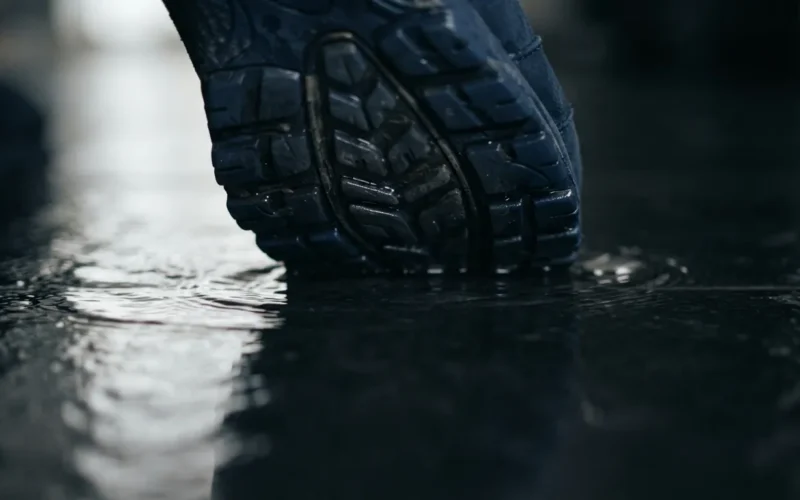
Every step depends on friction, the grip between your shoe and the floor. When your heel lands, it pushes forward against the floor. If the grip isn’t strong enough to resist that push, your foot slides and you slip. NIOSH describes slips as the result of too little friction between the shoe and the walking surface.
Water gets between your shoe and the floor and acts like a thin lubricating layer. Other liquids do the same, often worse: oil, grease, soap, cleaning products, and food spills can all make a floor far slicker than water alone.
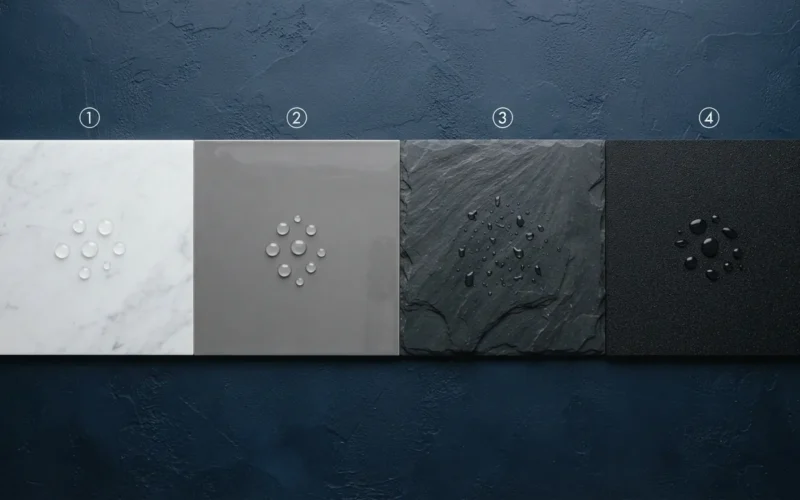
Smooth surfaces suffer the most. A polished stone, glossy tile, or sealed concrete floor that feels fine when dry can lose much of its grip when wet. Our guide to the most slippery flooring types explains why some materials are riskier than others, and slip resistance explained covers how floors are tested.
Why wet floors are easy to miss
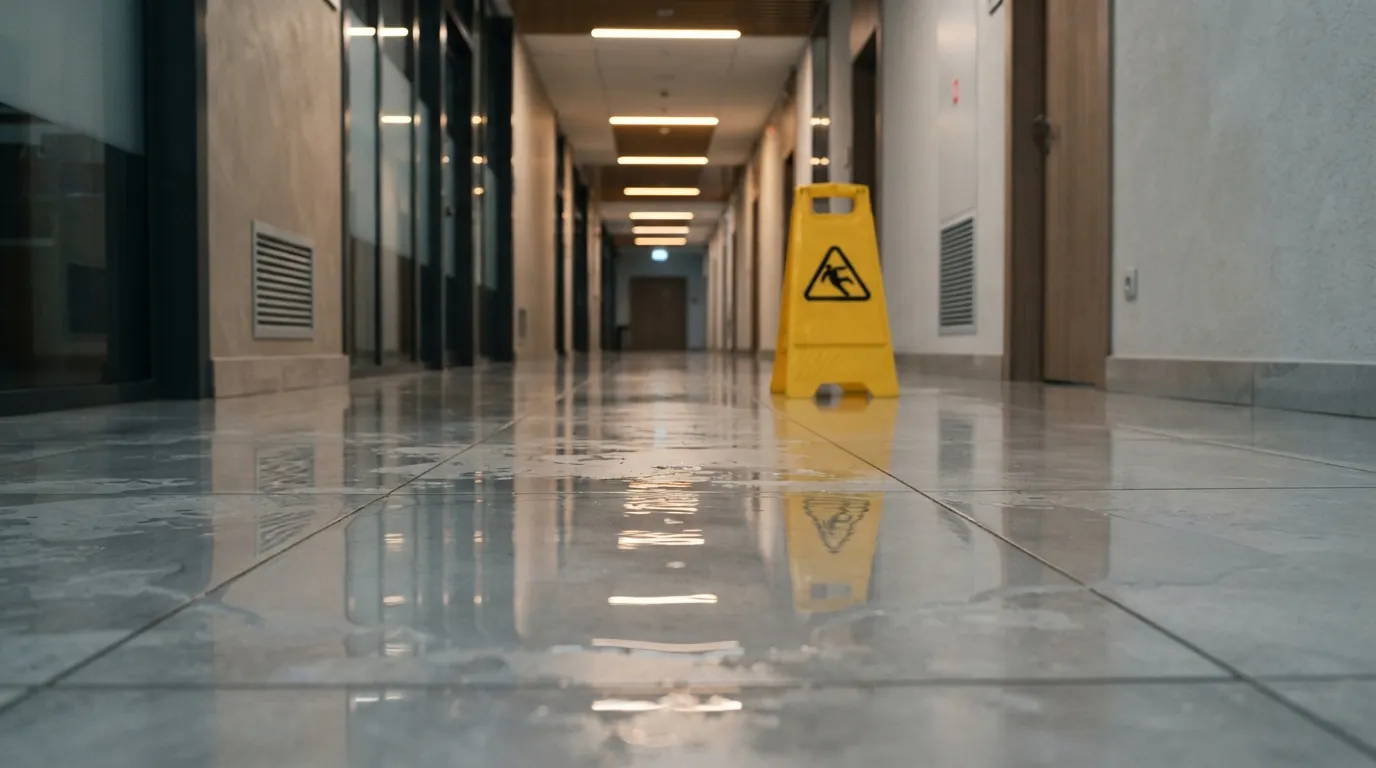
Large puddles are easy to see. The real danger is often a thin film of water that blends into a shiny floor, especially under bright overhead lights that already make the surface reflective. Clear liquids on light-colored tile can be nearly invisible.
Distraction plays a part too. People walking into a store are usually looking at shelves, signs, or their phone, not the floor.
Where wet floors show up most
- Entrances on rainy or snowy days. Water drips from umbrellas and coats and is tracked in on shoes, often several steps past the door.
- Freshly mopped floors. A floor can stay slippery until it’s completely dry.
- Kitchens and food areas. Grease, water, and dropped food are common, both in restaurants and at home.
- Bathrooms and locker rooms. Splashing from sinks and showers keeps floors damp.
- Grocery and retail stores. Leaking containers, produce misters, and freezer cases can all leave liquid on the floor. See our guide to grocery store spills.
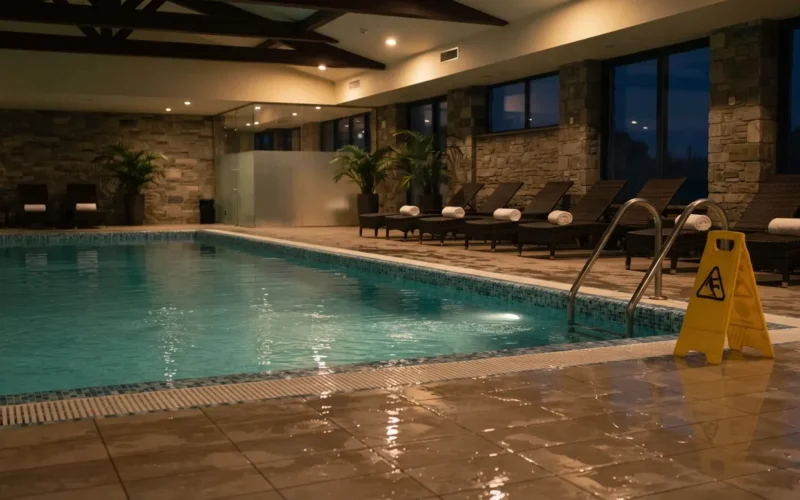
- Pool decks. Wet feet and wet tile are a risky mix. See pool deck slip hazards.
- Areas near leaks. Roof leaks, condensation from pipes or coolers, and dripping equipment can wet a floor slowly and quietly.
Warning signs to look for
- A floor that looks unusually shiny, or has light reflecting off it in patches
- Wet-floor signs, cones, or a mop and bucket nearby
- Wet footprints, cart tracks, or drips leading across the floor
- Puddles under umbrellas, coats, or entrance mats that are already soaked
- Condensation on nearby cold surfaces, such as freezer doors or pipes
- A change in floor material, for example from carpet to tile, where grip can change suddenly
How to walk more safely on a wet floor
You can’t always avoid wet floors, but you can lower your risk:
- Slow down and shorten your steps. Shorter steps keep your weight more directly over your feet.
- Keep your knees slightly bent and your weight centered over your feet.
- Keep your hands free so you can catch yourself or hold a rail.
- Use handrails and walls for support where available.
- Wear shoes with good tread. Smooth soles and worn-down shoes slip more easily. See slip-resistant footwear.
- Go around, not through. If an area is signed or visibly wet, take another route when you can.
What property owners and businesses can do
Federal workplace rules require employers to keep walking surfaces free of hazards such as spills, snow, and ice, and to fix or guard hazards before people use the area again. The same practical steps work for any property:
- Use entrance mats that are long enough for several footsteps to land on them, so they catch water and dirt before it spreads. NIOSH recommends mats of this size.
- Clean up spills right away, and keep cleanup supplies close by.
- Put out wet-floor signs while an area is wet, and remove them once it’s dry so people don’t learn to ignore them.
- Mop in sections and leave a dry path where possible.
- Fix leaks from roofs, pipes, and equipment.
- Inspect more often on rainy days and during busy periods.
If you manage a workplace, our guide to housekeeping habits that prevent falls at work goes further.
If you slip on a wet floor
If you fall, take a moment before getting up and check yourself for injuries. Our guide to common slip-and-fall injuries explains which symptoms need medical care. If the fall happened in a store or other public place, see what to do after a fall.
Sources
- National Institute for Occupational Safety and Health (NIOSH): Preventing slips, trips, and falls in wholesale and retail trade establishments
- Occupational Safety and Health Administration (OSHA): 29 CFR 1910.22, Walking-working surfaces: general requirements