Stair hazards are easy to overlook because we climb the same steps every day. Here are the problems that make a staircase risky and the fixes that make the biggest difference.
Key takeaways
Key takeaways
– Stairs work best when every step is the same height and depth. A single step that’s different can throw off your stride.
– Worn or rounded step edges, slippery treads, and loose carpet make it easier to miss a step, especially going down.
– A sturdy handrail you can grip along the full length of the stairs is one of the most effective safety features.
– Good lighting, clear steps, and visible edges help you see exactly where each step begins.
Why stairs cause so many falls
Climbing stairs is something most people do without thinking, and that’s part of the problem. After the first step or two, your body sets a rhythm and expects every step to match. If one step is a little higher, shorter, or more slippery than the rest, your foot lands in the wrong place before your brain catches up.
Going down is usually riskier than going up. Your weight moves forward over a narrow tread, and you rely on seeing each edge clearly. Missing an edge by even a small amount can cause a fall.
Uneven steps
Uniform steps are a basic rule of safe stair design. OSHA’s workplace stair rules, for example, require stairs to have uniform riser heights and tread depths between landings. Homes are covered by local building codes instead, but the principle is the same everywhere: steps should match.
Common problems include:
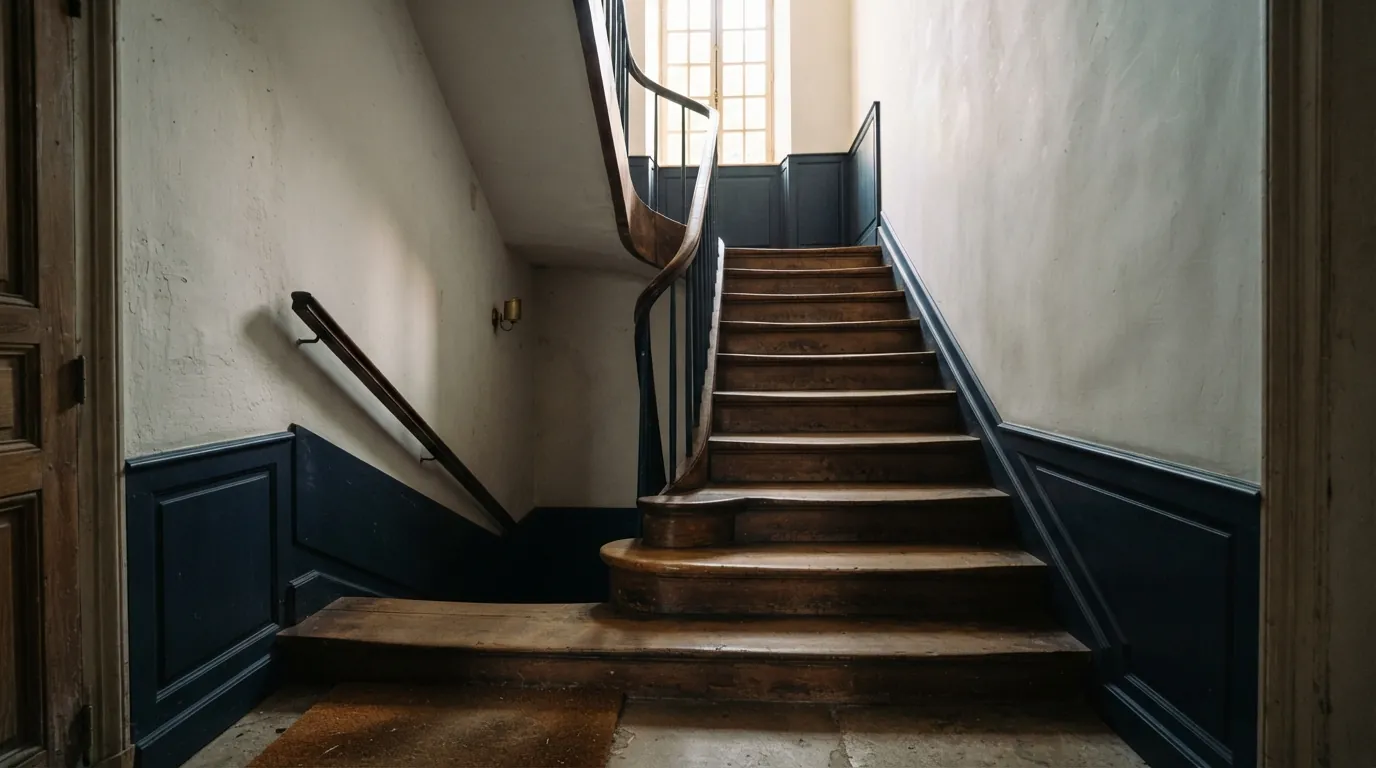
- a top or bottom step that’s a different height from the rest, often where stairs meet a floor that was later raised or lowered,
- steps that have settled or shifted, especially outdoor concrete steps,
- treads that slope forward or sideways, and
- added flooring, such as a new tile or wood layer, on only part of a staircase.
What helps: If a step is noticeably different, have it evaluated and repaired by a qualified contractor. Until then, mark it clearly with a contrasting strip so people notice it.
Worn treads and edges
The front edge of each step, called the nosing, takes the most wear. Over time, wood gets polished smooth, stone wears into a rounded lip, and metal edge strips loosen or break off. A worn, rounded nosing makes the edge harder to see and gives your foot less to land on.
What helps:
- Repair or replace damaged treads and nosings.
- Add slip-resistant treads or strips, and replace them when they wear.
- Mark step edges with a contrasting color so each edge stands out. Our guide to stair lighting and visibility covers this in more detail.
Slippery treads
Polished wood, smooth tile, and painted surfaces can be slippery even when dry, and much worse when wet. Outdoor steps collect rain, leaves, ice, and snow.
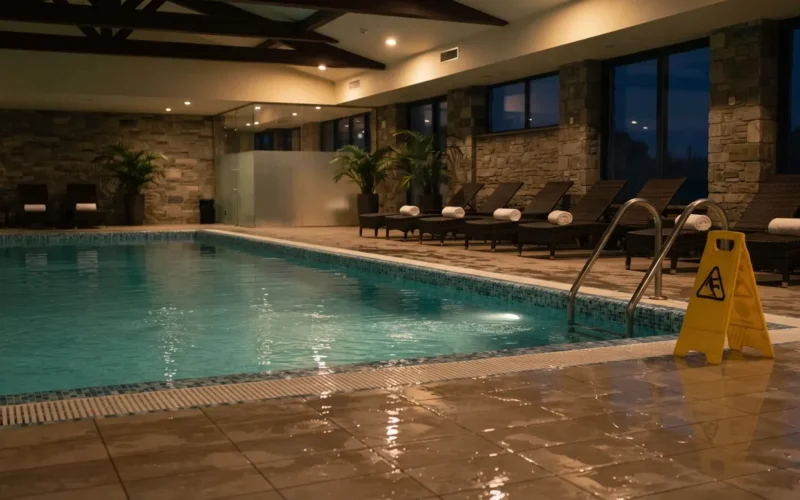
What helps: Use slip-resistant treads or coatings, keep outdoor steps clear, and wipe up spills on indoor stairs right away. See why wet floors cause so many falls.
Loose carpet and runners
Carpet that has pulled loose, a runner that slides, or a frayed edge can catch a heel or shift underfoot.
What helps: Secure carpet tightly to every step, or remove it and use slip-resistant treads instead. Don’t place loose rugs at the top or bottom of stairs.
Missing or inadequate handrails
A handrail gives you something to hold if you misstep. It only helps if it’s there when you need it, so problems include:
- no handrail at all, or a rail on only one side of a wide staircase,
- a rail that stops before the top or bottom step,
- a rail that’s loose, wobbly, or broken, and
- a rail that’s too thick, flat, or decorative to grip firmly.
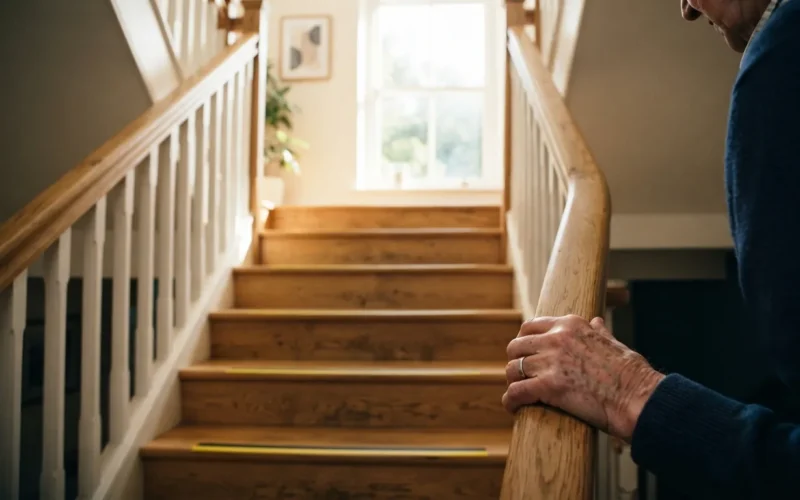
What helps: Install sturdy handrails that run the full length of the stairs, ideally on both sides. They should be easy to wrap your hand around. The CDC’s home fall prevention checklist for older adults recommends handrails on both sides of the stairs, as long as the stairs themselves.
Clutter on the stairs
Shoes, bags, laundry, and boxes left on steps “to carry up later” are classic trip hazards.
What helps: Keep stairs completely clear. Use a basket at the bottom of the stairs, not on them.
Poor lighting
Dim stairs make it hard to judge where edges are, and shadows can hide a step.
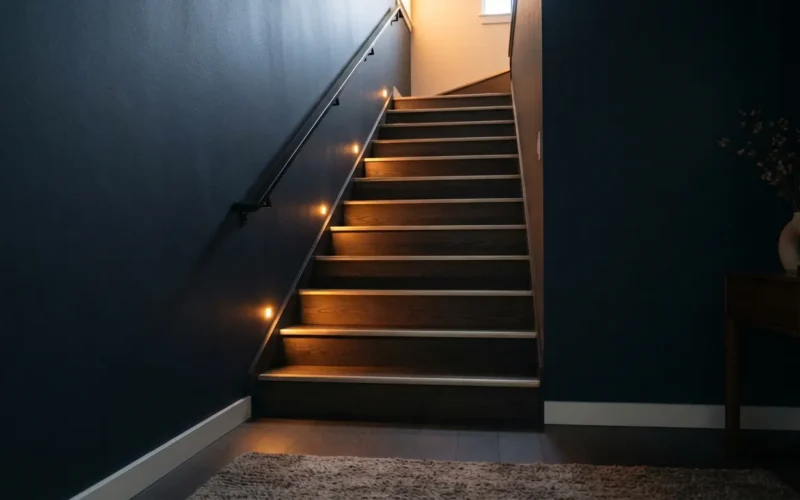
What helps: Light the entire staircase, with switches at both the top and bottom, and consider night lights or motion-activated lights. Our stair lighting guide explains what works.
A quick stair safety check
Walk your stairs slowly and check:
- Every step is the same height and depth.
- Every edge is solid, intact, and easy to see.
- Treads aren’t slippery, and any carpet is tight.
- Handrails run the full length and are firm when you pull on them.
- The whole staircase is well lit, with switches at both ends.
- Nothing is stored on the steps.
If you’re checking stairs for an older relative, see safer stairs for older adults.
If you fall on stairs
Stair falls can cause serious injuries, including head injuries and broken bones. Our guide to common slip-and-fall injuries explains which symptoms need care. If the fall happened on someone else’s property, see premises liability basics.
Sources
- Occupational Safety and Health Administration (OSHA): 29 CFR 1910.25, Stairways
- Centers for Disease Control and Prevention (STEADI): Check for Safety: a home fall prevention checklist for older adults