Slip-resistant footwear is one of the most effective ways to prevent slips on wet and greasy floors. Here’s what makes a shoe grip, and how to choose and care for a good pair.
Key takeaways
Key takeaways
– Slip-resistant shoes use softer rubber soles and tread patterns designed to push liquid out from under the shoe.
– In a large NIOSH study of food service workers, providing highly rated slip-resistant shoes cut slip-injury claims by 67%.
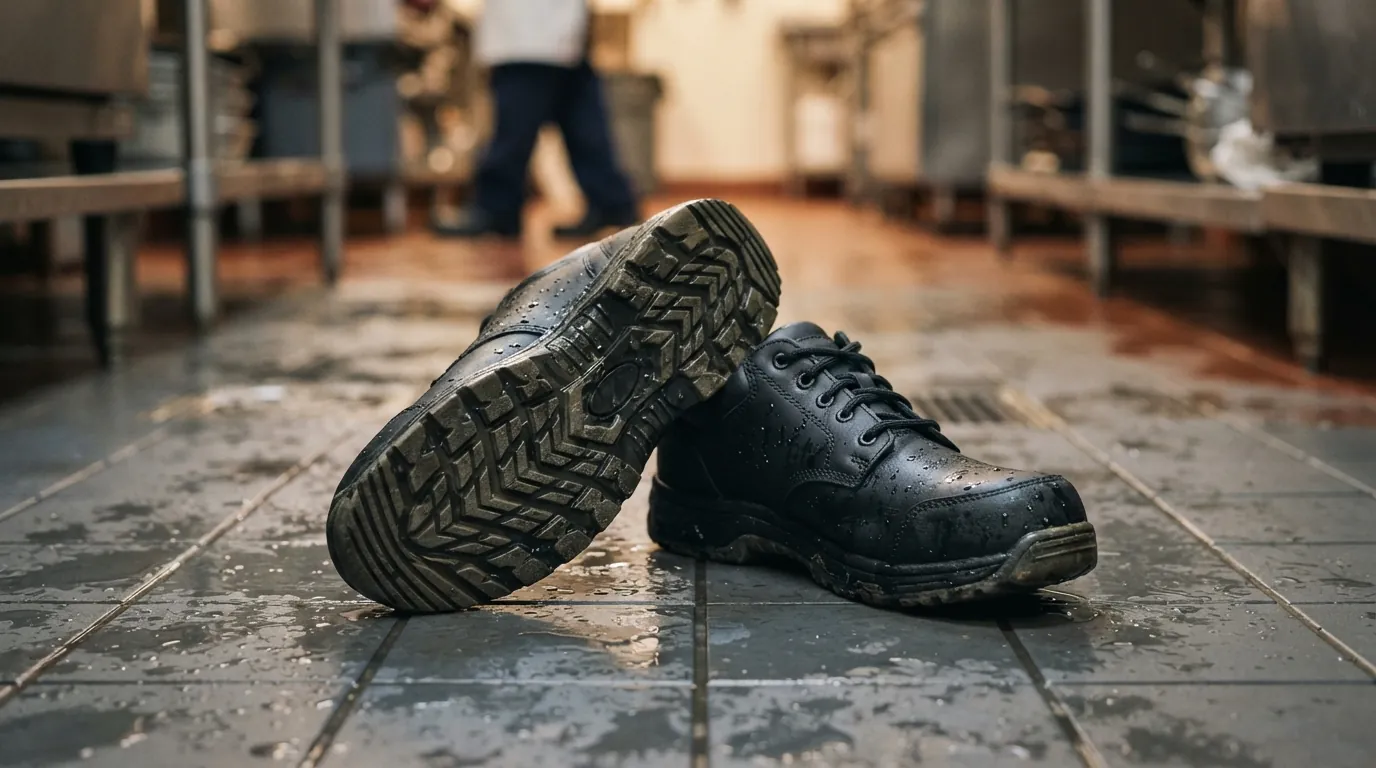
– Look for a soft rubber sole, small and closely spaced tread with channels, and a flat, wide contact area.
– Treads wear down. Replace shoes when the pattern is smooth, especially at the heel.
Why shoes matter so much
Slips happen when there isn’t enough grip between the shoe and the floor. You can’t always control the floor, but you can control your shoes. On a wet or greasy surface, a good sole can be the difference between a stumble and a fall.
What the research shows
NIOSH researchers ran a randomized trial with roughly 17,000 food service workers in 226 school districts. Districts were randomly assigned to either receive highly rated slip-resistant shoes at no cost to workers or continue as usual.
Workers in districts that received the shoes saw a 67% reduction in workers’ compensation claims for slip injuries. There was no decline in the comparison group. The researchers also found that workers over 55 had a higher rate of slip-related claims before the program, a reminder that grip matters more as balance changes with age.
The study looked specifically at slips on wet or greasy floors, the kind of incident these shoes are designed to prevent.
What makes a shoe slip-resistant
Sole material
Softer rubber compounds generally grip better on wet, smooth surfaces than hard plastics or leather. Leather soles and hard, shiny soles are among the most slippery on wet floors.
Tread pattern
Good slip-resistant treads usually have:
- many small tread elements rather than a few large lugs,
- channels that let water and grease escape from under the sole, much like the grooves in a car tire,
- tread across the whole sole, including the heel, where most slips begin.
Deep, chunky lugs made for hiking trails grip well on dirt and mud but don’t always perform best on smooth, wet indoor floors.
Contact area
A flatter, wider sole puts more rubber in contact with the floor. Narrow heels and rounded soles reduce contact.
Fit
Shoes should fit snugly at the heel, with laces or straps that keep your foot from sliding inside. Loose shoes and backless styles make tripping and slipping more likely.
How to choose
- Look for an explicit slip-resistance claim, ideally with test results, rather than vague terms like “non-marking.” “Non-marking” only means the sole won’t leave scuff marks.
- Match the shoe to the job. Kitchens need grip on grease (see restaurant fall hazards). Healthcare and cleaning work need grip on water and cleaning solutions. Outdoor work needs grip on ice and mud.
- Check the heel. Make sure the tread pattern continues across the heel.
- Try them on a smooth floor. If they feel slick in the store, they’ll feel worse on a wet floor.
- Consider comfort. Shoes that are uncomfortable won’t get worn.
Caring for slip-resistant shoes
- Clean the soles regularly. Grease and debris clog the channels and cut grip.
- Check the tread often. Replace shoes when the pattern is worn smooth, especially at the heel.
- Don’t wear work shoes outside if you can avoid it. Outdoor wear can grind down the tread and carry in dirt.
Beyond work: everyday shoes
The same principles apply at home and out and about:
- Choose shoes with rubber soles and visible tread for rainy days.
- Avoid wearing socks alone, slippers with smooth soles, or going barefoot on hard floors, especially for older adults.
- Use ice cleats or traction devices on icy sidewalks, and take them off indoors, since they can be slippery on smooth floors.
For employers
NIOSH’s findings suggest that providing highly rated slip-resistant shoes, rather than leaving it to workers to buy their own, is an effective way to cut slip injuries. Combine shoes with the other basics: clean floors, quick spill response, good mats, and lighting. Our guide to the most common causes of workplace slips, trips, and falls covers the full picture, and housekeeping habits that prevent falls at work turns it into a routine.
For how floors are rated, see slip resistance explained.
Sources
- National Institute for Occupational Safety and Health (NIOSH) Science Blog: Does slip-resistant footwear reduce slips, trips, and falls in food service?
- Bell JL, et al., Scandinavian Journal of Work, Environment & Health (2019): Effectiveness of a no-cost-to-workers, slip-resistant footwear program for reducing slipping-related injuries in food service workers