Restaurant fall hazards are everywhere in a busy kitchen, and some reach the dining room too. This guide covers where falls happen and the practices that prevent them.
Key takeaways
Key takeaways
– Restaurant kitchens combine water, grease, heat, speed, and heavy loads, a perfect setup for slips.
– Hot spots include fryer and grill stations, dish areas, ice machines, walk-in coolers, and the swinging doors between kitchen and dining room.
– OSHA’s guidance for restaurants stresses keeping floors clean and dry, wiping up spills and ice right away, using wet-floor signs, and providing mats or dry standing areas where floors stay wet.
– Slip-resistant shoes make a big difference for staff.
Why restaurants are high-risk
Few workplaces put as much liquid on the floor as a busy restaurant. Cooking oil splatters, dishwashers splash, ice spills, and food falls. Staff move fast, often carrying hot plates, trays, or heavy bins that block their view of the floor. Doors swing both ways, and kitchens are often crowded.
Guests face risks too, from wet entrances and spilled drinks to steps between dining levels and dim lighting.
Kitchen hazards
Grease near cooking stations
Grease from fryers and grills settles on the floor as a thin, nearly invisible film. It’s among the most slippery contaminants and can be hard to remove with water alone.
Dish and prep areas
Dishwashing and food prep put water on the floor constantly. OSHA’s restaurant guidance calls for keeping floors clean and dry, and, where floors are always wet, maintaining drainage and providing mats, raised platforms, or other dry places to stand.
Ice machines and drink stations
Ice scooped from bins often lands on the floor and melts into puddles. OSHA’s guidance specifically recommends wiping up fallen ice immediately.
Walk-in coolers and freezers
Condensation inside refrigerators and freezers can make floors wet and slippery. Ice can build up near freezer doors.
Delivery and storage areas
Unloading supplies, especially outdoors in bad weather, adds trip and slip risks. OSHA’s guidance recommends non-slip footwear and keeping walking surfaces free of ice and snow.
Clutter and cords
Boxes, crates, hoses, and cords in walkways cause trips. OSHA’s restaurant guidance suggests providing floor outlets for equipment so cords don’t need to cross pathways.
Dining room hazards
- Spilled drinks and food under and around tables
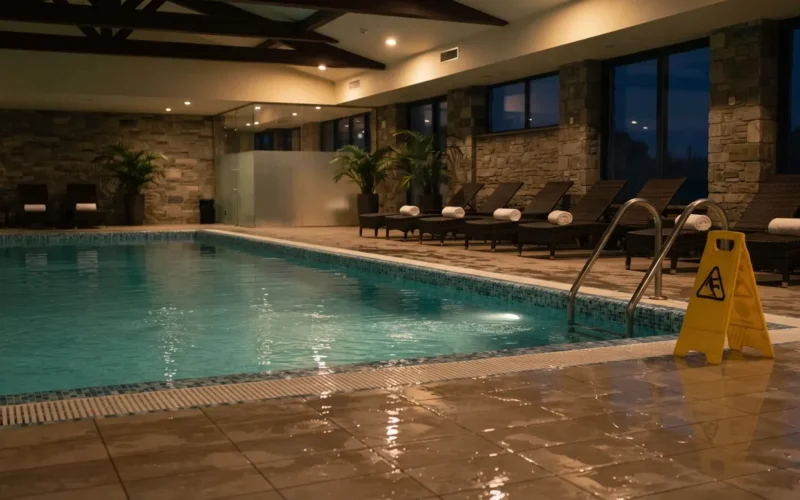
- Wet entrances on rainy days
- Steps or level changes between dining areas, especially with dim mood lighting
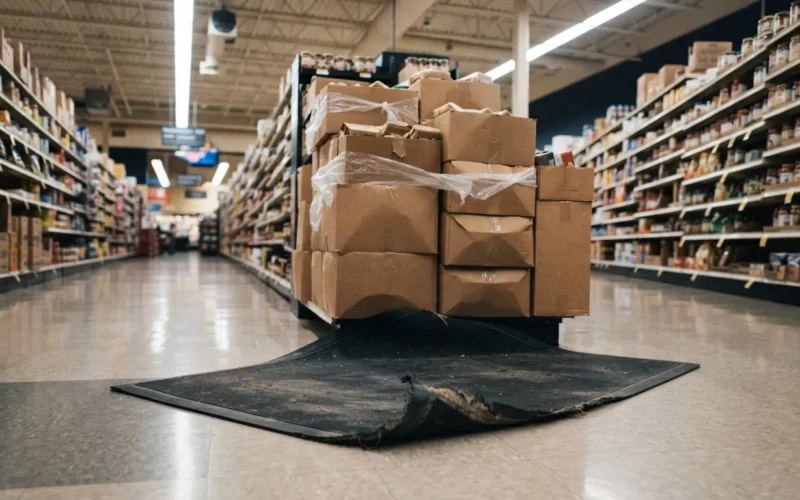
- Rugs and mats that curl or slide
- Swinging kitchen doors, where staff and guests can collide
- Crowded aisles with chairs, bags, and high chairs
Practices that prevent falls
Keep floors clean and dry
- Wipe up spills, food, and ice immediately.
- Use degreasing cleaners suited to the floor, and follow the manufacturer’s directions so no slippery residue is left behind.
- Mop in sections and keep a dry path open.
Warn people about wet floors
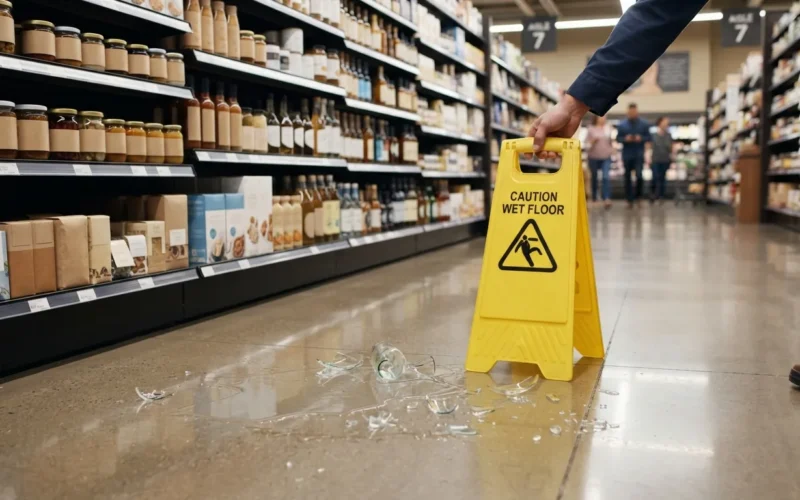
OSHA’s guidance calls for warning signs in wet floor areas. Put them out while floors are wet and remove them once dry.
Use mats and drainage
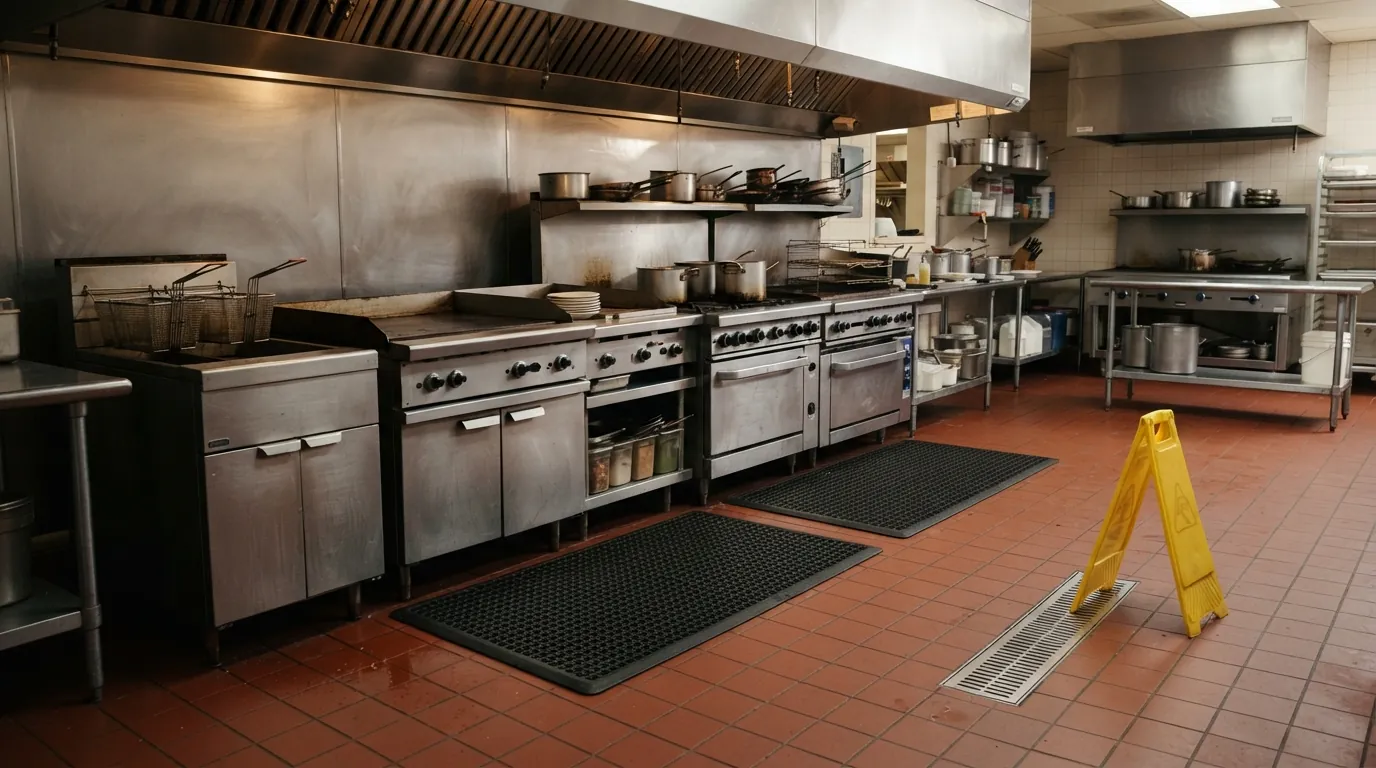
- Use anti-slip, drainage-style mats at fryers, sinks, and dish stations.
- Keep floor drains clear, and replace mats that curl or slide.
Control traffic
- Keep walkways free of clutter and crowding.
- Use a set traffic pattern, such as entering and exiting the kitchen on different sides, to avoid collisions at doors.
- Add windows to swinging doors so staff can see who’s coming.
Footwear
Require slip-resistant shoes for kitchen staff. In a large NIOSH study, providing highly rated slip-resistant shoes to food service workers cut slip-injury claims by 67%. See slip-resistant footwear.
Training and habits
- Train new staff on spill response and where the slippery spots are.
- Don’t overfill bus tubs or trays, and carry loads that let you see the floor.
- Walk, don’t run, even during a rush.
Flooring
When renovating, choose flooring rated for wet and greasy areas. Our guide to slip resistance explained covers the ratings.
If someone falls
Staff injuries are usually handled through workers’ compensation, so report them to a manager right away. For guests, see what to do after a fall in a store or public place. Our guide to common slip-and-fall injuries explains which symptoms need care.
Sources
- Occupational Safety and Health Administration (OSHA): Young Worker Safety in Restaurants eTool: general hazards
- Occupational Safety and Health Administration (OSHA): Young Worker Safety in Restaurants eTool: delivery and storage
- National Institute for Occupational Safety and Health (NIOSH) Science Blog: Does slip-resistant footwear reduce slips, trips, and falls in food service?