Grocery store spills are a daily reality in any busy supermarket. This guide explains where they happen, how well-run stores manage them, and what shoppers can do.
Key takeaways
Key takeaways
– Grocery stores are full of liquids, produce, and ice, and all of them end up on the floor sooner or later.
– Well-run stores use regular floor checks, quick cleanup, warning signs, and good entrance mats to keep floors safe.
– Spills are most likely near produce, coolers and freezers, checkouts, and entrances on rainy days.
– As a shopper, slow down in high-risk areas, watch the floor as well as the shelves, and tell staff about any spill you see.
Why grocery stores have so many spills
A grocery store is one of the few places where people walk past thousands of liquid containers, piles of loose produce, and cases of melting ice, all while looking at shelves instead of the floor. Add carts, crowds, and wet weather, and spills are inevitable.
NIOSH lists spills on walking surfaces, rain and snow, loose mats, and poor lighting among the main causes of slips, trips, and falls in retail settings. The question isn’t whether spills will happen. It’s how quickly they’re found and handled.
Where spills happen most
- Produce areas. Grapes, berries, leafy greens, and water from misting systems collect on the floor.
- Coolers and freezers. Condensation, frost, and leaking packages can leave water on the floor in front of cases.
- Seafood and meat counters. Melting ice and drips from packaging are common.
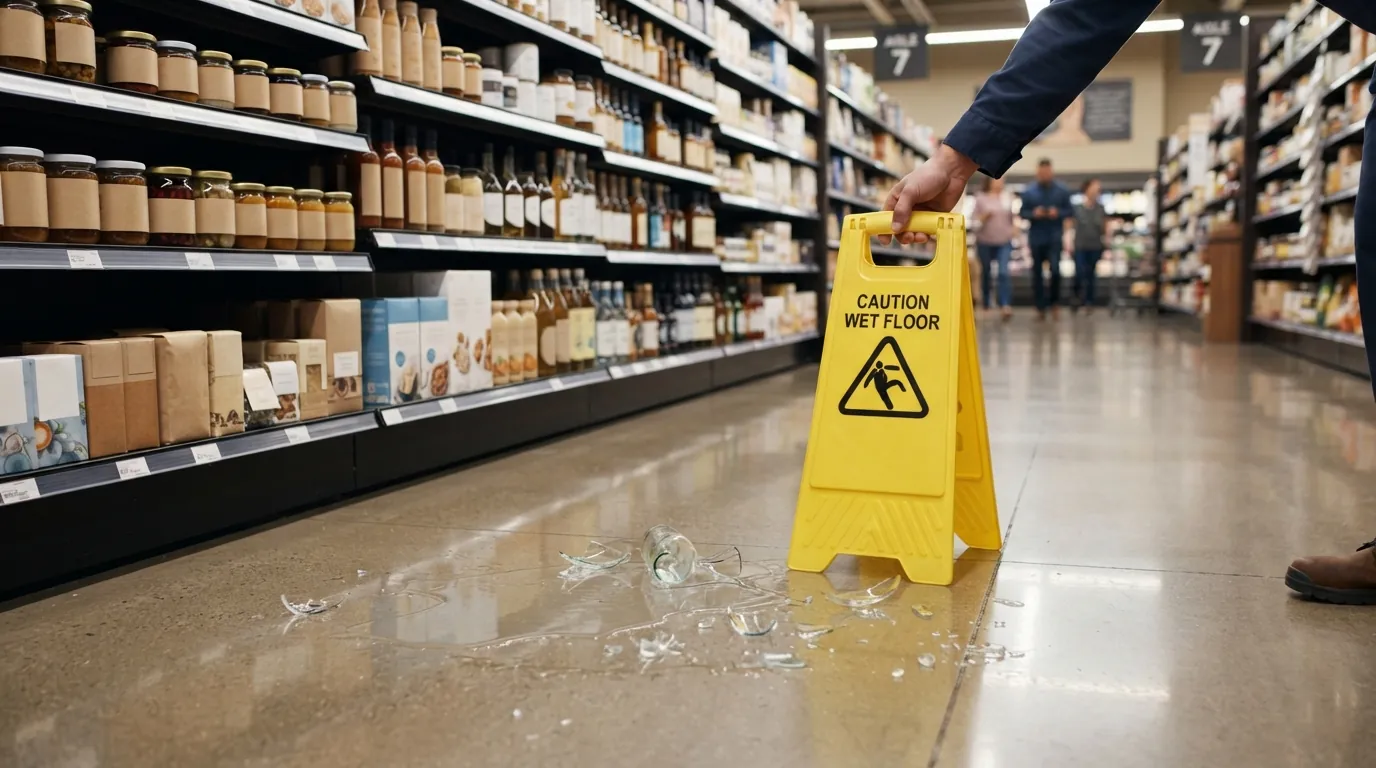
- Beverage and household aisles. A single broken bottle or leaking jug can cover a wide area.
- Checkout lanes. Items fall from carts and belts, and leaks are often noticed only at checkout.
- Entrances. On rainy or snowy days, water is tracked in on shoes, carts, and umbrellas.
- Restrooms and floral departments. Both involve water near hard floors.
How well-run stores manage floor hazards
Regular floor checks
Many stores assign employees to walk the floor on a schedule, looking for spills, debris, and hazards. Checks are usually more frequent during busy times and bad weather. Some stores keep a written or digital log of each check.
Quick cleanup
NIOSH recommends keeping cleanup supplies at convenient locations so employees can respond quickly. A typical response is:
- Guard the spill so no one walks through it, often by having an employee stand by it.
- Put out a wet-floor sign or cone.
- Clean up the spill and any broken glass.
- Dry the area completely.
- Remove the sign once the floor is dry.
Warning signs that mean something
Wet-floor signs work best when they’re used only while a hazard exists. NIOSH advises removing signs once the floor is clean and dry. Signs left out all day teach people to ignore them.
Entrance mats and weather plans
Long entrance mats catch water and dirt before they spread. NIOSH recommends mats large enough for several footsteps to land on them. On wet days, stores often add extra mats, mop entrances more often, and offer umbrella bags.
Floors and footwear
Many stores choose flooring with better slip resistance in high-risk areas and require employees to wear slip-resistant shoes. Our guides to slip resistance ratings and slip-resistant footwear explain both.
What shoppers can do
- Watch the floor in high-risk areas, especially produce, freezer aisles, and entrances.
- Look for clues: shiny patches, cart tracks, broken glass, loose grapes, or a wet-floor sign.
- Slow down and take shorter steps on wet days or if the floor looks shiny.
- Keep a hand on your cart for extra stability.
- Tell an employee about any spill you see, and stand near it to warn others if you can.
- Wear shoes with good tread, especially in rain or snow.
If you slip in a store
Take a moment before getting up, and check yourself for injuries. Then:
- Report the fall to a manager before you leave.
- Take photos of the area, including the spill, nearby signs or lack of them, and your shoes.
- Write down the names of employees and witnesses.
- Get medical care if you’re hurt, even if the injury seems minor at first.
Our guide on what to do after a fall in a store or public place explains each step, and common slip-and-fall injuries covers symptoms to watch for. For how a store’s responsibilities generally work, see premises liability basics.
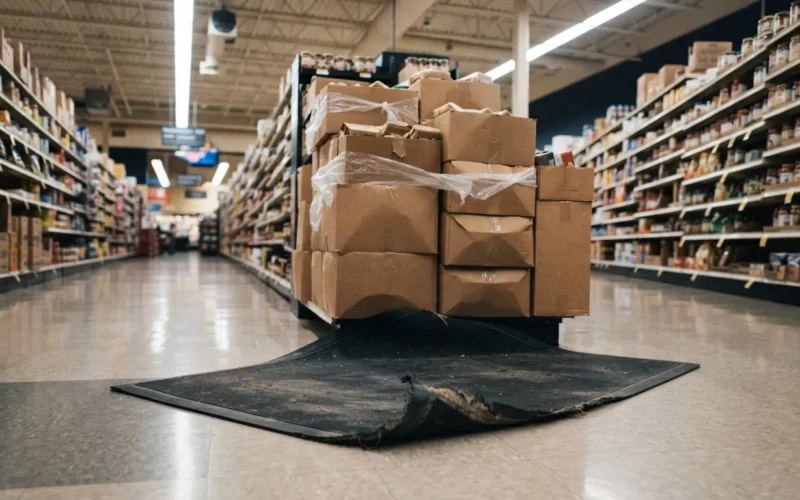
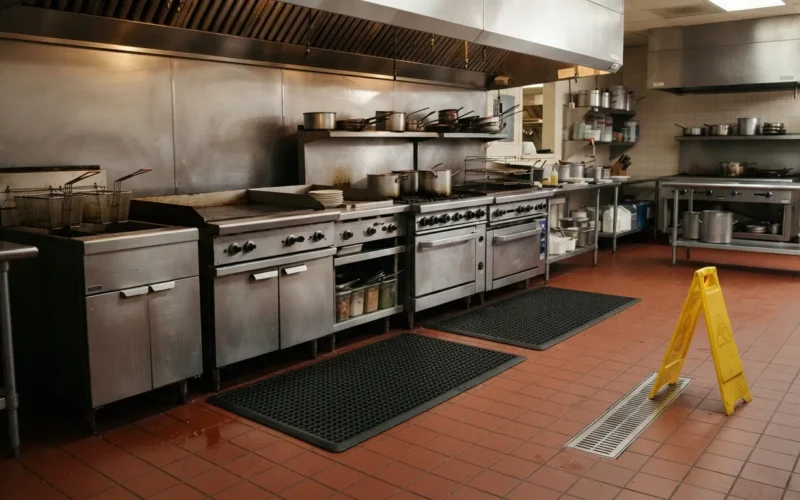
Other store hazards are covered in trip hazards from displays, mats, and merchandise, and food service in restaurant fall hazards.
Sources
- National Institute for Occupational Safety and Health (NIOSH): Preventing slips, trips, and falls in wholesale and retail trade establishments
- Occupational Safety and Health Administration (OSHA): 29 CFR 1910.22, Walking-working surfaces: general requirements