Stair safety for older adults deserves special attention, because changes in balance, vision, and strength make stairs harder to manage. Use this practical checklist to make stairs safer.
Key takeaways
Key takeaways
– About one in four adults 65 and older reports a fall each year, and falls are the leading cause of injury in this age group, according to the CDC.
– Stairs are a key place to focus: add sturdy handrails on both sides, light both ends, and make every edge easy to see.
– Footwear, vision, medicines, and strength and balance all affect stair safety too.
– Talk to a healthcare provider about any fall, even one without injury.
Why stairs deserve special attention
As we age, changes in vision, balance, strength, reaction time, and medicines can make stairs harder to manage. Many older adults also live in homes with stairs they’ve used for decades, which makes hazards easy to overlook.
The CDC reports that about one in four adults age 65 and older reports falling each year, that falling once doubles the chance of falling again, and that less than half of older adults who fall tell their doctor. The good news: many fall risk factors can be changed.
The stair checklist
This checklist draws on the CDC’s Check for Safety home fall prevention checklist.
Handrails
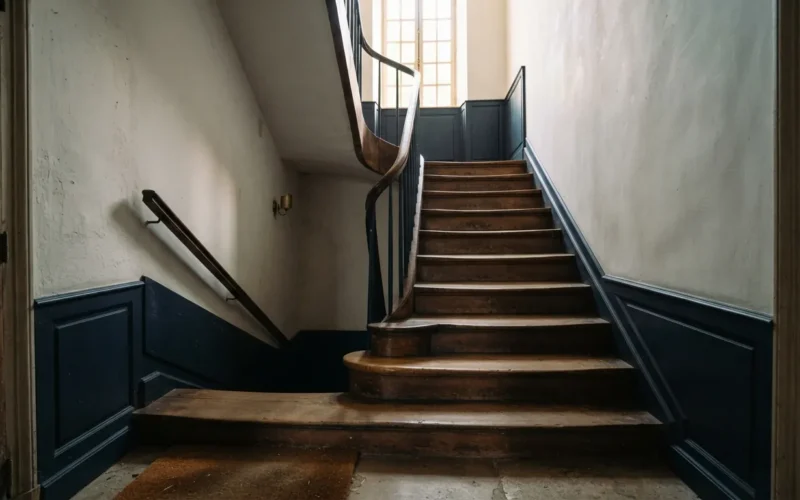
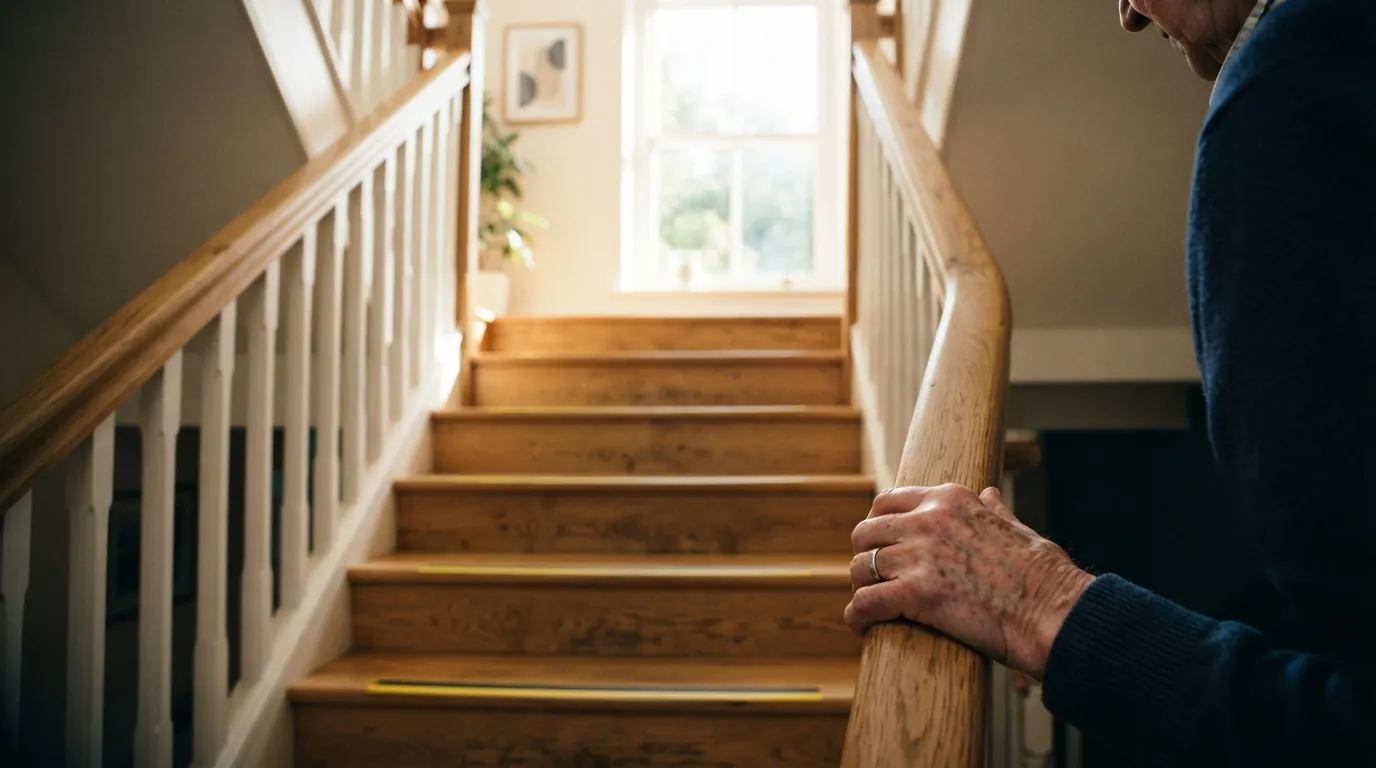
- Handrails on both sides of the stairs
- Handrails run the full length of the stairs, from the very top to the very bottom
- Handrails are firm and don’t wobble when pulled
- Handrails are easy to grip, not too thick or flat
Lighting
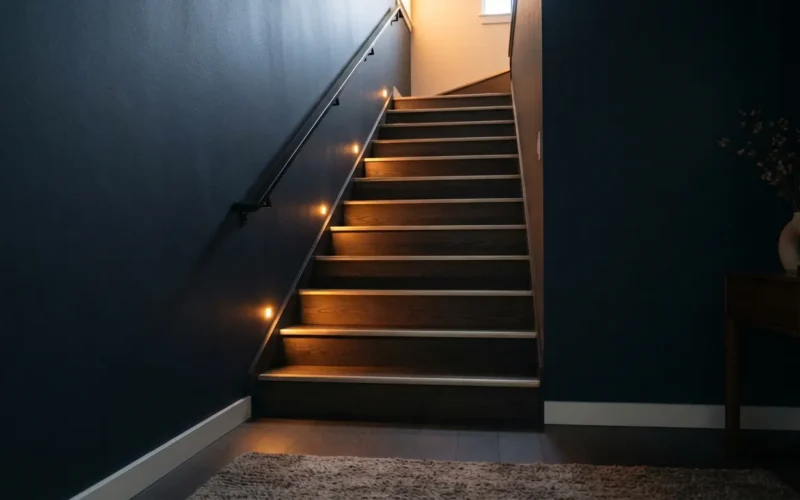
- An overhead light at the top and bottom of the stairs
- Light switches at both the top and bottom, ideally ones that glow in the dark
- Night lights or motion lights for night-time trips
- No burned-out bulbs. Ask someone to help change them rather than climbing a ladder.
Steps
- No objects on the stairs: papers, shoes, books, laundry
- No broken or uneven steps
- Carpet firmly attached to every step, or removed and replaced with non-slip rubber treads
- Edges easy to see, for example with a light-colored paint or contrasting strip on the front edge of dark steps
Outdoor steps
- Steps and paths well lit
- Handrails on outdoor steps
- Steps kept clear of leaves, snow, and ice
For more detail, see the most common stair hazards and stair lighting and visibility.
Habits that help
- Use the handrail every time, going up and down, even for a few steps.
- Keep one hand free. Carry smaller loads, use a bag you can wear, or make two trips.
- Don’t rush, especially to answer the door or phone.
- Turn on the light before using the stairs at night.
- Wear shoes with non-slip soles on stairs, not socks or loose slippers. The CDC recommends wearing shoes inside and outside the house.
- Take your time after sitting or lying down. Getting up slowly can help prevent dizziness.
Health steps that lower fall risk
The CDC’s STEADI initiative encourages older adults to:
- Talk to a healthcare provider about falls, especially after a fall or if you feel unsteady.
- Review medicines with a doctor or pharmacist, since some can cause dizziness or drowsiness.
- Get your eyes checked at least once a year.
- Do exercises that build leg strength and improve balance.
When stairs become too hard
If stairs are becoming difficult, options include:
- moving daily living, like the bedroom and bathroom, to one floor,
- adding a second handrail or a sturdier one,
- a stair lift, and
- an assessment by an occupational therapist, who can recommend home changes.
If someone falls on the stairs
Falls on stairs can cause head injuries and broken bones, including hip fractures. An older adult who falls and hits their head should see a doctor right away, especially if they take blood thinners. See common slip-and-fall injuries for danger signs.
For the rest of the home, see fixing everyday trip hazards at home and bathroom fall prevention.
Sources
- Centers for Disease Control and Prevention (STEADI): Check for Safety: a home fall prevention checklist for older adults
- Centers for Disease Control and Prevention: Older adult falls facts
- Centers for Disease Control and Prevention: Older adult falls data