Home trip hazards like loose rugs, cords, and clutter cause many falls, especially for older adults. Most are quick and cheap to fix, and this guide shows how, room by room.
Key takeaways
Key takeaways
– Most falls at home come from a short list of fixable hazards: loose rugs, cords, clutter, poor lighting, and stairs.
– Many fixes are free or cheap: moving furniture, coiling cords, and keeping paths clear.
– Night lights and light switches at both ends of halls and stairs prevent many night-time falls.
– Older adults are at the highest risk, so a home safety check is especially worthwhile for them.
Why the home is a common place to fall
We know our homes so well that we stop seeing them. A rug that’s always curled at one corner or a cord that’s always crossed the hallway becomes part of the background, until the day someone catches a foot on it in the dark.
Falls are the leading cause of injury for adults 65 and older, and the CDC lists hazards like throw rugs, clutter, and broken or uneven steps among the conditions that make falls more likely. The good news is that most home trip hazards are easy to fix.
The usual suspects
Throw rugs and mats
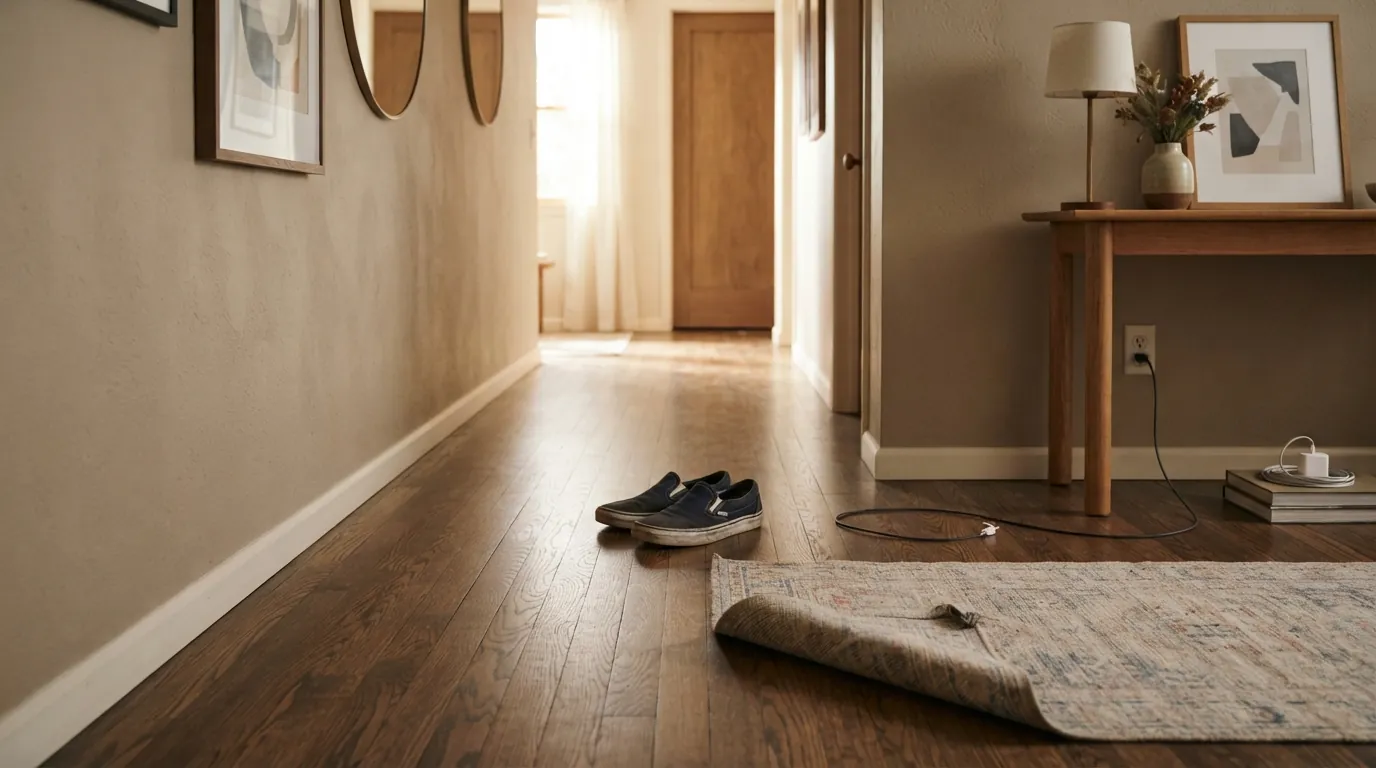
Small rugs slide, bunch up, and curl at the edges.
Fix: Remove throw rugs where you can. If you keep one, secure it with double-sided rug tape or a non-slip pad, and replace any rug with curled or frayed edges.
Cords and cables
Lamp cords, phone chargers, extension cords, and TV cables often cross walking paths.
Fix: Coil or tape cords next to the wall so you can’t trip over them. The CDC’s home safety checklist suggests having an electrician add outlets so cords don’t need to cross walkways.
Clutter
Shoes, bags, laundry, toys, and boxes on the floor are classic trip hazards, especially on stairs.
Fix: Keep floors and stairs clear. Give everyday items a home: a shoe rack by the door, a basket for mail, a bin for toys.
Furniture in the way
Coffee tables, footstools, and plant stands can narrow a path or sit in the dark where you don’t expect them.
Fix: Rearrange furniture so you have clear, wide paths through each room.
Poor lighting
Dark hallways and stairs make every other hazard harder to see.
Fix: Use brighter bulbs, add night lights in halls, bathrooms, and bedrooms, and make sure there’s a light switch at both the top and bottom of stairs. Keep a lamp within reach of the bed.
Pets
Pets can dart underfoot, and pet toys, bowls, and beds often end up in walkways.
Fix: Keep pet items out of main paths, and know where your pet is before you move in the dark.
Changes in floor height
Raised thresholds, transitions between flooring types, and single steps between rooms can catch a toe.
Fix: Mark single steps with a contrasting strip, and replace or bevel high thresholds where possible.
A room-by-room checklist
Entry
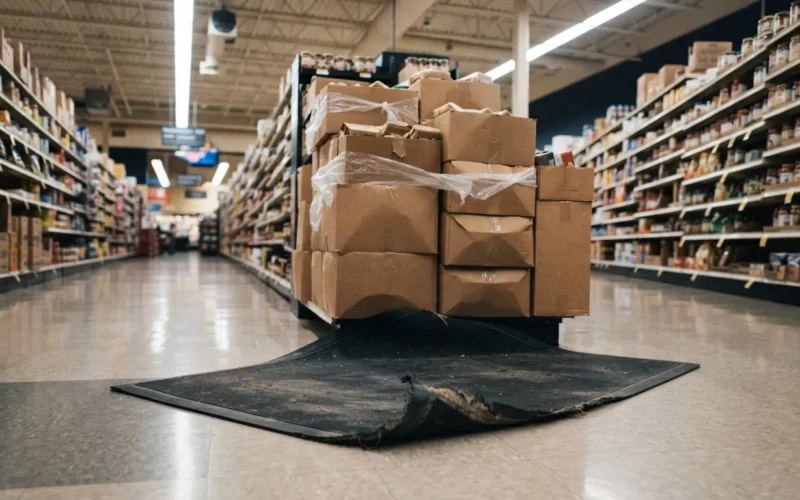
– [ ] Mat lies flat and has a non-slip backing.
– [ ] Shoes and bags have a place off the floor.
– [ ] Entry is well lit, inside and out.
Living room
– [ ] Clear paths around furniture.
– [ ] No cords crossing walkways.
– [ ] Rugs are secured or removed.
Kitchen
– [ ] Spills are wiped up right away.
– [ ] Everyday items are within easy reach, so you don’t need a step stool.
– [ ] If you do need one, use a sturdy step stool with a bar to hold, never a chair.
Bedroom
– [ ] Lamp or switch within reach of the bed.
– [ ] Night light on the path to the bathroom.
– [ ] Clear floor between the bed and the door.
Bathroom
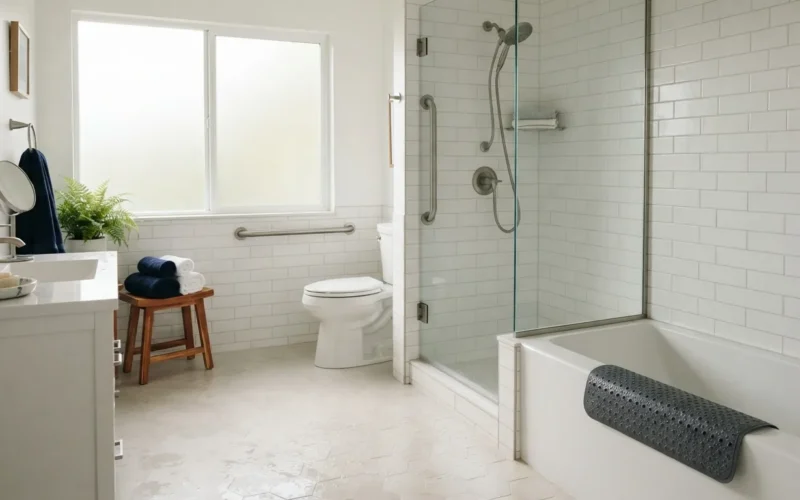
– [ ] Non-slip mat or strips in the tub or shower.
– [ ] Grab bars where you need support. See bathroom fall prevention.
Stairs
– [ ] Nothing stored on the steps.
– [ ] Handrails on both sides, as long as the stairs.
– [ ] Light switches at the top and bottom.
Our guide to common stair hazards goes into stairs in more detail.
Beyond the home itself
Hazards are only part of fall risk. Shoes matter too: the CDC recommends wearing shoes inside and outside the house and avoiding going barefoot or wearing slippers. Regular exercise that builds strength and balance, yearly eye checks, and reviewing medicines with a healthcare provider can all lower the chance of a fall.
Renting? Know who fixes what
If you rent, you can handle many fixes yourself, like rugs, cords, and clutter. Repairs to the building itself, such as broken steps, loose handrails, or faulty wiring, are often the landlord’s responsibility, depending on your lease and local law. Report them in writing and keep a copy.
Sources
- Centers for Disease Control and Prevention (STEADI): Check for Safety: a home fall prevention checklist for older adults
- Centers for Disease Control and Prevention: Older adult falls facts