Good stair lighting lets you see exactly where each step begins, which is what keeps your feet landing in the right place. These simple fixes make every step easier to see.
Key takeaways
Key takeaways
– On stairs, you need to see exactly where each step edge is. Poor light, shadows, and patterned carpet make that harder.
– Light the whole staircase, with switches at both the top and bottom, and keep bulbs working.
– Marking step edges with a contrasting color helps each step stand out, especially going down.
– Night lights, motion-sensor lights, and glow-in-the-dark switches help prevent night-time falls.
Why seeing the edge matters
Going down stairs, you place your foot based on where you see the edge of the next step. If the edge is hard to see because of dim light, a shadow, or a busy carpet pattern that blends one step into the next, your foot can land too far forward or too far back. A small misjudgment can turn into a fall.
Good stair visibility comes from three things working together: enough light, light in the right places, and contrast that makes each edge stand out.
Common visibility problems
- Dim or burned-out lighting, especially in basements, garages, and back stairs
- One switch only, so people climb or descend in the dark to reach it
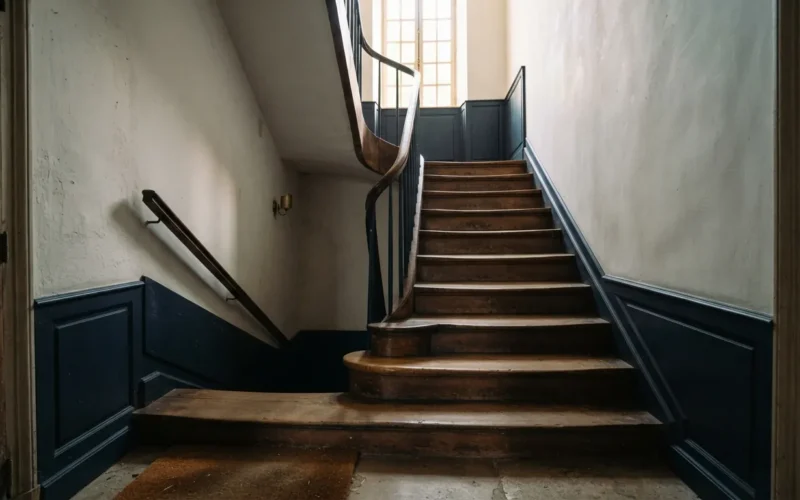
- Shadows cast by the person on the stairs, or by lights placed behind them
- Glare from a window or bright bulb at the top or bottom
- Patterned carpet or uniform color, which makes all the steps blend together
- Dark outdoor steps with no porch or path lighting
Simple lighting fixes
Light the whole staircase
The CDC’s home fall prevention checklist recommends having a light over the stairway at both the top and the bottom. Aim for even light along the whole flight, without dark patches.
Put switches at both ends
The same CDC checklist recommends a light switch at the top and bottom of the stairs. An electrician can add a second switch (a “three-way” switch). It also suggests switches that glow in the dark, so you can find them easily.
Keep bulbs working
Replace burned-out bulbs right away. LED bulbs last much longer, which means fewer trips up a ladder.
Add night lights or motion lights
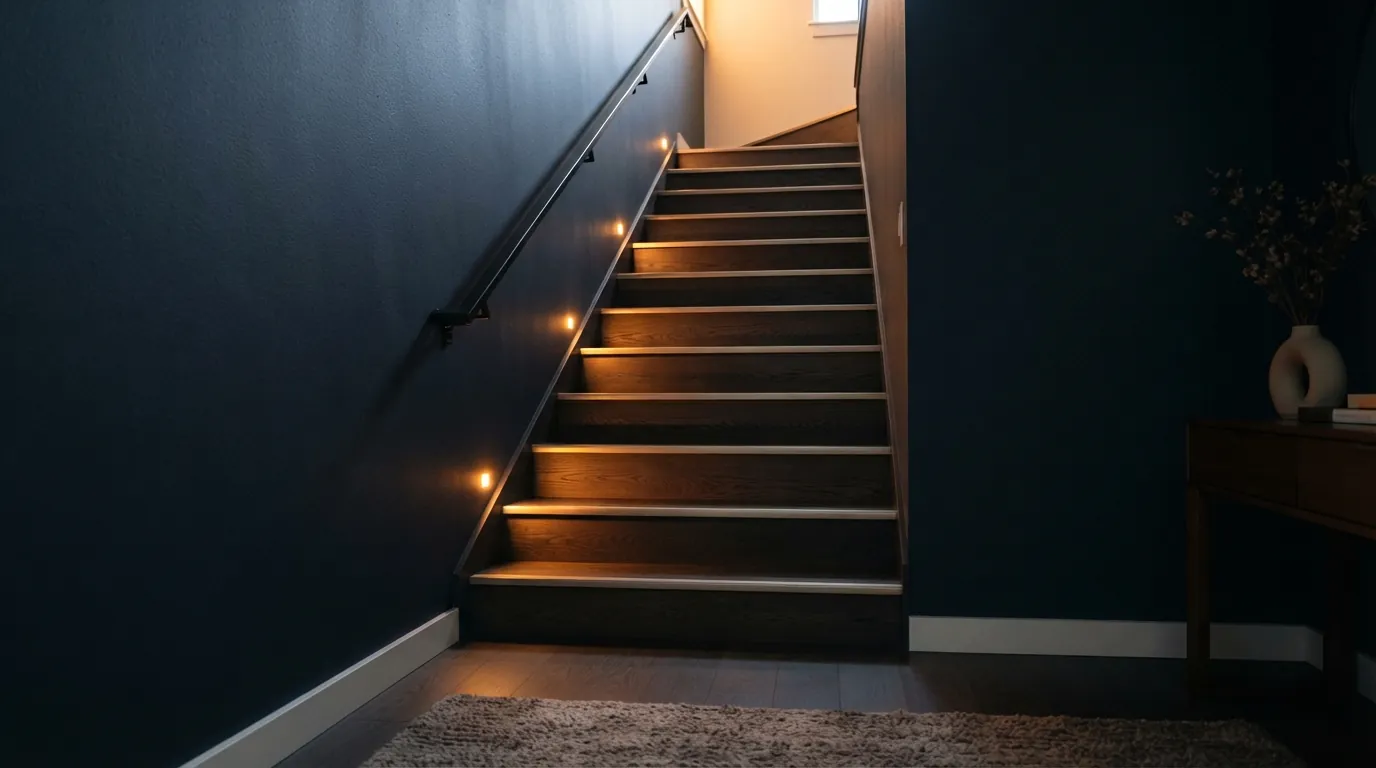
Plug-in night lights near the top and bottom of stairs, or motion-activated lights, help with night-time trips to the bathroom or kitchen. Step lights built into the wall or treads give especially clear edges.
Reduce glare and shadows
Place lights so they shine down onto the steps from in front of you as you descend, rather than from behind. Use shades or diffusers on bare bulbs, and consider window coverings if sunlight causes glare at certain times of day.
Don’t forget outdoor steps
Light porch, deck, and garden steps, and the path to them. Motion-sensor or dusk-to-dawn fixtures are easy options.
Make every edge stand out
Even with good light, stairs can be hard to read if every step is the same color.
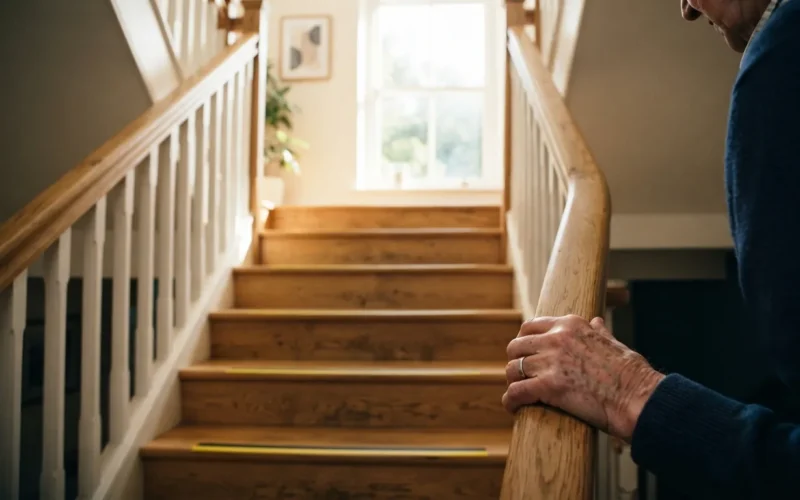
- Contrasting edge strips. Mark the front edge of each step with a strip in a contrasting color. The CDC suggests, for example, using a light-colored paint on the edges of dark wooden steps. Slip-resistant contrasting tape or nosing strips do the same job and add grip.
- Mark the first and last steps especially clearly, since those are where many people misjudge.
- Choose plain carpet or treads on stairs. Busy patterns can disguise edges.
- Mark single steps and short flights. A lone step between rooms or at a doorway is easy to miss.
Workplaces and public buildings
In commercial buildings, stairs are covered by building codes and, for employers, by workplace safety rules that require stairs to be maintained in safe condition. Visibility features like contrasting stair nosings and good stairwell lighting are common, and are worth checking if you manage a building.
A quick visibility check
Try your stairs at different times of day and night:
- Can you clearly see every step edge going down?
- Can you turn on the light from both the top and bottom?
- Are there any dark patches, shadows, or glare?
- Do the first and last steps stand out?
- Are outdoor steps lit after dark?
For other stair problems, see the most common stair hazards. If you’re checking stairs for an older relative, see safer stairs for older adults.
Sources
- Centers for Disease Control and Prevention (STEADI): Check for Safety: a home fall prevention checklist for older adults
- Occupational Safety and Health Administration (OSHA): 29 CFR 1910.25, Stairways