Parking lot hazards are easy to miss because your attention is on cars, not the pavement. Here are the most common ones and how walkers and property owners can avoid them.
Key takeaways
Key takeaways
– Parking lots mix many hazards in a small space: potholes, wheel stops, curbs, speed bumps, oil, water, and ice.
– People in parking lots are usually watching for cars, carrying bags, or managing children, not watching the ground.
– Low, gray wheel stops and curbs are easy to miss, especially at night.
– Owners can help with repairs, bright markings, good lighting, and prompt snow and ice removal.
Why parking lots are tricky
A parking lot asks you to do several things at once: watch for moving cars, find your vehicle, carry shopping, hold a child’s hand, and look at your phone for a list or directions. Meanwhile, the ground is full of objects and changes in height designed for cars, not people.
Common parking lot hazards
Potholes and broken pavement
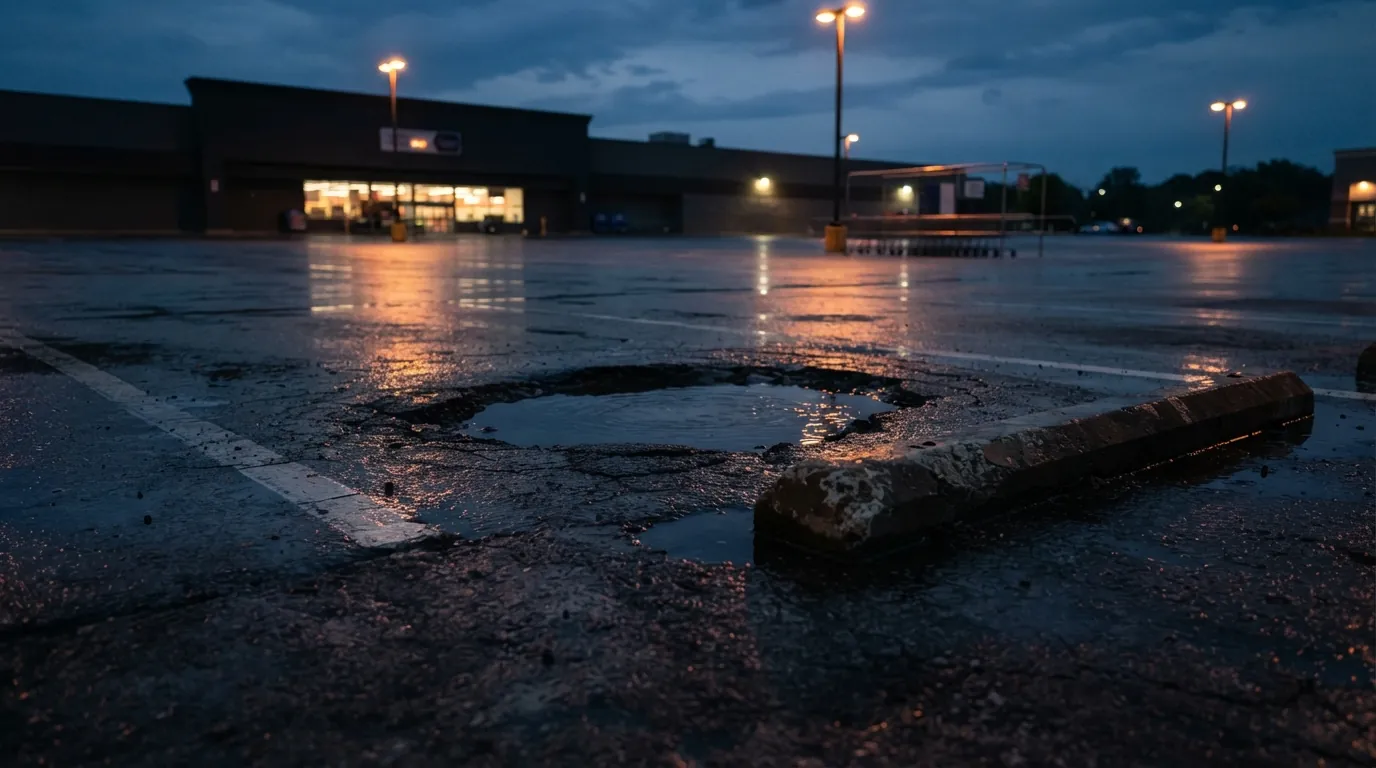
Holes, cracks, and crumbling edges can catch a foot or twist an ankle. They’re worse when filled with water, which hides their depth.
Wheel stops
Concrete or rubber wheel stops (also called parking blocks) sit low, often in the same gray color as the pavement. People walking between cars, or cutting across empty spaces, trip over them often.
Curbs, islands, and medians
Raised curbs around islands and walkways create sudden changes in height, especially where paint has faded.
Speed bumps
Speed bumps are designed to be noticed by drivers, but pedestrians can catch a toe on them, particularly in low light.
Uneven transitions
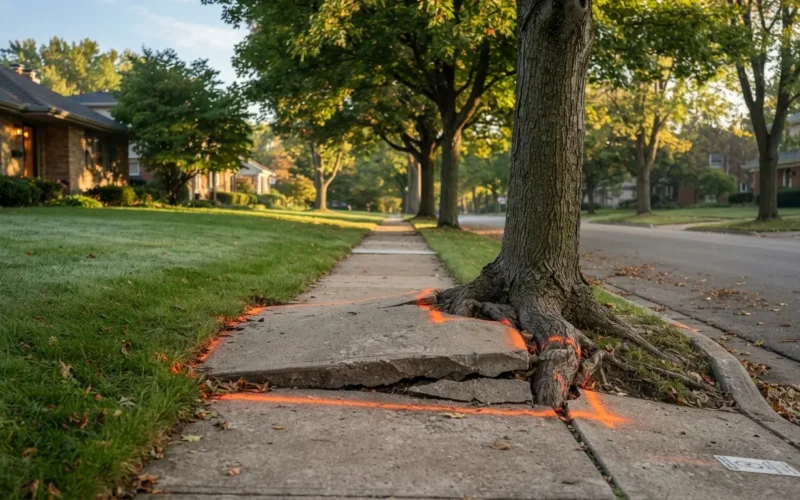
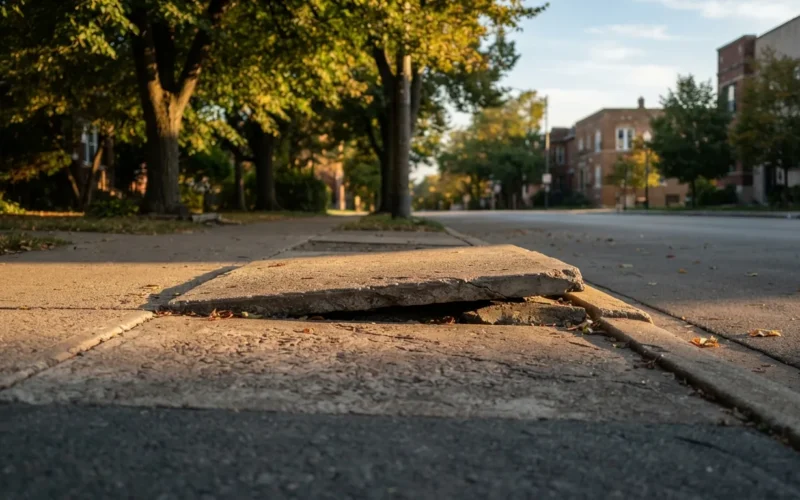
The step from parking lot to sidewalk, poorly matched curb ramps, and drainage channels can all trip you. Accessibility standards limit small changes in level on accessible routes for exactly this reason: under the ADA Standards, changes over 1/4 inch must be beveled, and changes over 1/2 inch need a ramp.
Oil, water, and debris
Oil from parked cars, puddles, wet leaves, gravel, and litter all reduce grip.
Ice and snow
Plowed snow piles, refreezing meltwater, and thin black ice make winter parking lots especially risky.
Poor lighting
Dark patches between light poles hide every hazard above.
How to walk more safely
- Look down as well as around, especially when stepping between cars or onto curbs.
- Use marked walkways and crossings where they exist.
- Keep one hand free if you can, and use a cart for heavy bags.
- Slow down in the dark and in bad weather, and choose well-lit routes.
- Wear shoes with good tread in rain and snow.
- Step over wheel stops and curbs deliberately, rather than shuffling.
- Hold onto your car for support when getting in and out on icy days.
What property owners and managers can do
- Repair potholes and broken pavement promptly, and mark hazards until they’re fixed.
- Paint wheel stops, curbs, and speed bumps in bright, contrasting colors, such as yellow, and repaint them as they fade.
- Consider whether wheel stops are needed in every space. Some lots remove them in favor of painted lines or curbs at the front of the space.
- Light the lot evenly, without dark gaps, and replace failed lights quickly.
- Keep drainage working so water doesn’t collect where people walk.
- Plan for winter: clear and treat walkways and parking areas early, and pile snow away from walking paths.
- Inspect regularly, especially after storms and freeze-thaw cycles.
Employers have similar duties for parking areas used by workers. OSHA’s walking-working surfaces rules require employers to keep walking surfaces free of hazards such as snow and ice, and to inspect and repair them.
If you fall in a parking lot
Move out of the path of traffic if you safely can, then check yourself for injuries. Our guide to common slip-and-fall injuries explains which symptoms need care. Then see what to do after a fall in a store or public place for reporting and record-keeping.
For sidewalks, see sidewalk trip hazards.
Sources
- U.S. Access Board: Guide to the ADA Accessibility Standards, Chapter 3: Floor and ground surfaces
- Occupational Safety and Health Administration (OSHA): 29 CFR 1910.22, Walking-working surfaces: general requirements