Workplace housekeeping is one of the simplest and cheapest ways to prevent slips and trips on the job. These everyday habits keep walkways clear and floors dry.
Key takeaways
Key takeaways
– Good housekeeping is one of the simplest, cheapest ways to prevent slips and trips at work.
– OSHA requires workplaces to be kept clean, orderly, and sanitary, and walking surfaces free of hazards like spills, snow, and ice.
– The core habits: clean as you go, respond to spills fast, keep aisles clear, control cords, and inspect regularly.
– Housekeeping works best when everyone owns it, not just the cleaning crew.
Why housekeeping matters
Most slips and trips at work come from things that shouldn’t be on the floor: water, grease, boxes, cords, and debris. Housekeeping is how a workplace keeps those things off walking surfaces before someone finds them with their feet.
OSHA’s general requirements for walking-working surfaces make this a legal duty for most employers. Workplaces, passageways, storerooms, and service rooms must be kept clean, orderly, and sanitary, and walking surfaces must be kept free of hazards such as spills, leaks, snow, and ice. Floors must be kept clean and, as far as feasible, dry. Where wet processes are used, drainage must be maintained and dry standing places such as mats or platforms provided where feasible.
The core habits
Clean as you go
Don’t save cleanup for the end of the shift. Wipe up drips, sweep debris, and put tools away as you work. Small messes are quicker to fix than big ones, and they never get the chance to cause a fall.
Respond to spills fast
- Keep cleanup supplies close to where spills happen. NIOSH recommends placing them at convenient locations.
- Guard the spill right away so no one walks through it.
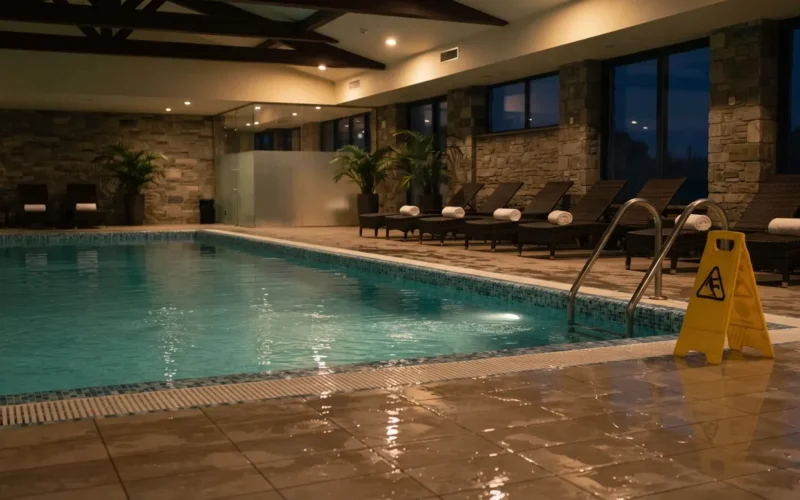
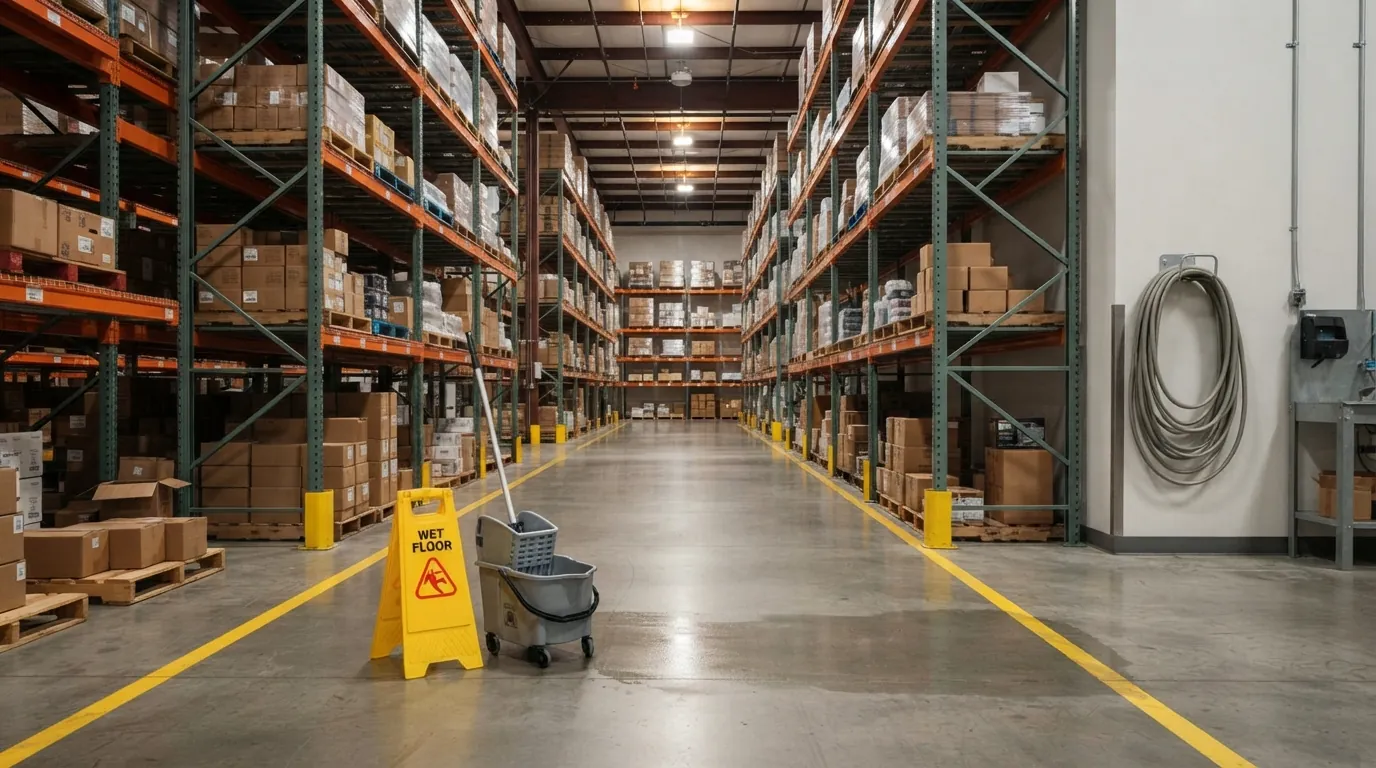
- Put out a wet-floor sign, clean the spill, dry the floor, and remove the sign once the floor is dry.
- Find the source. A recurring spill usually means a leak, an overfilled container, or a process that needs fixing.
Keep aisles and exits clear
- Mark walkways and keep them free of boxes, pallets, carts, and tools.
- Store materials on shelves or in designated areas, not on the floor.
- Never block exits, stairways, or emergency equipment.
- Remove packaging and trash promptly.
Control cords and hoses
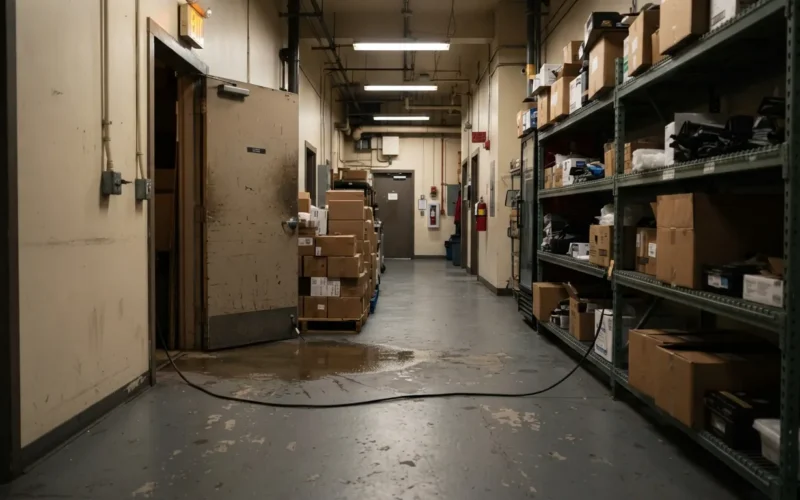
- Route cords along walls or overhead, not across walkways.
- Where a cord must cross a path, use a cord cover made for foot traffic.
- Coil and hang hoses and cables when not in use.
Use and maintain mats
- Place absorbent mats at entrances, sinks, and other wet areas. NIOSH recommends entrance mats long enough for several footsteps to land on them.
- Replace mats that curl, slide, or are worn through.
- Clean mats regularly so they don’t become saturated.
Keep lighting working
Replace burned-out bulbs promptly, and report dark areas in stairwells, storerooms, and outdoor walkways.
Inspect regularly
OSHA requires walking-working surfaces to be inspected regularly and as necessary, and hazards to be corrected or guarded before employees use the surface again. A simple routine works well:
- a quick walk-through at the start of each shift,
- extra checks during busy periods and bad weather, and
- a written log for recurring problem areas.
A daily housekeeping checklist
- Floors dry and free of spills, grease, and debris
- Aisles, walkways, and exits clear
- No cords or hoses across walking paths
- Mats flat, clean, and in place
- Spill supplies stocked and easy to reach
- Wet-floor signs available, and removed when floors are dry
- Lights working in all work areas, stairs, and exits
- Outdoor walkways clear of snow, ice, and leaves
- Damaged flooring, steps, or handrails reported
Making it stick
- Make it everyone’s job. Encourage all workers to fix small hazards and report bigger ones.
- Make reporting easy, and act quickly on reports so people keep making them.
- Train new workers on spill response and where problem areas are.
- Lead by example. Supervisors who pick up hazards themselves set the tone.
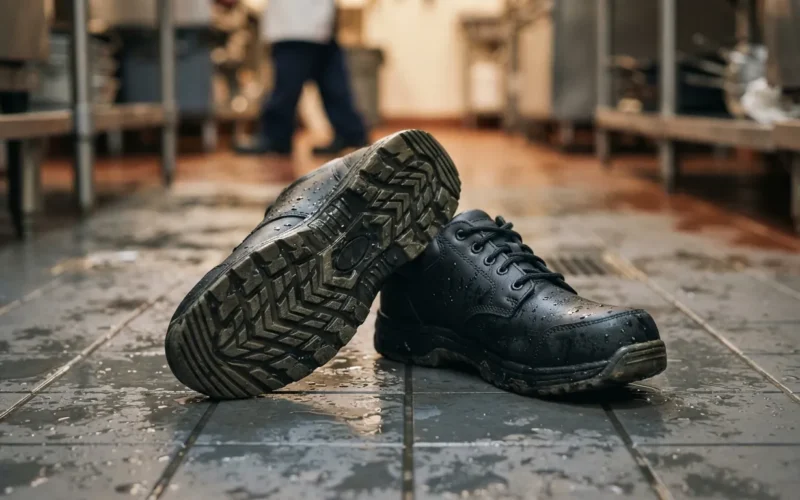
- Pair housekeeping with good footwear. See slip-resistant footwear.
For the full list of causes, see the most common causes of workplace slips, trips, and falls.
Sources
- Occupational Safety and Health Administration (OSHA): 29 CFR 1910.22, Walking-working surfaces: general requirements
- National Institute for Occupational Safety and Health (NIOSH): Preventing slips, trips, and falls in wholesale and retail trade establishments