Sidewalk repair responsibility surprises many people, because public sidewalks aren’t always maintained by the city. Here’s how it usually works and why local rules decide.
Key takeaways
Key takeaways
– There’s no single national rule. Sidewalk responsibility is set by state law and local ordinances.
– In many places, the property owner next to the sidewalk must keep it in repair, even though the sidewalk is public. In others, the city does the work, or the two share it.
– Snow and ice removal, tree-root damage, and damage caused by utility work are often handled under separate rules.
– If you see a hazard, report it to your city. If you own property, check your local rules before you need them.
General information, not legal advice. Who is responsible for a sidewalk, and who may be liable for a fall, depends on state and local law. For advice about a specific situation, talk to a licensed attorney in your state.
Why the answer depends on where you are
Most sidewalks sit on public land, but that doesn’t mean the city always maintains them. Each state and city decides who is responsible for building, repairing, and clearing sidewalks. The result is a patchwork of rules that can differ even between neighboring towns.
In general, sidewalk responsibility falls into three patterns:
- Property owner responsibility. The owner of the property next to the sidewalk must keep it in good repair, often at their own cost.
- City responsibility. The city inspects and repairs sidewalks, usually funded through taxes or a dedicated program.
- Shared responsibility. The city and property owners split the work or the cost, for example with the city covering tree-root damage and owners covering everything else.
An example: New York City
New York City is a well-known example of the property-owner model. City law requires property owners to install, repair, and maintain the sidewalk next to their property at their own cost. When the city’s Department of Transportation finds a defect, it sends the owner a Notice of Sidewalk Violation. The owner then has 75 days to make repairs. If they don’t, the city may do the work and bill the owner.
New York City also shows how exceptions work:
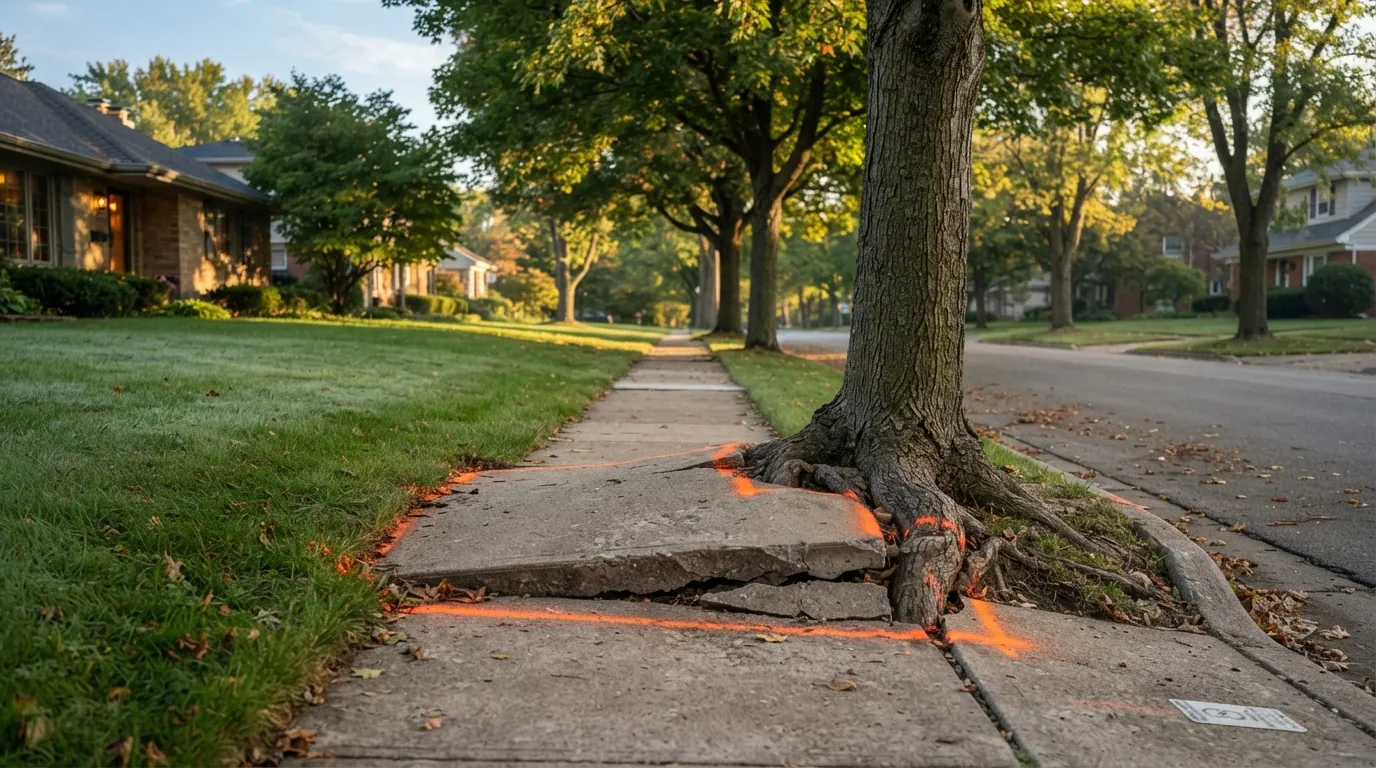
- Tree roots. Damage caused by street-tree roots in front of 1-, 2-, or 3-family homes may qualify for free repair through a city parks program.
- Utility and contractor damage. If a utility company or contractor damaged the sidewalk, the property owner is told to document it and contact that company for repairs.
- Curbs. The city maintains curbs, separate from the sidewalk itself.
Your city may work very differently. Always check your local rules.
Snow and ice
Many cities require property owners or occupants to clear snow and ice from the sidewalk within a set time after a storm, even where the city handles repairs. Deadlines, fines, and rules about where to put the snow vary widely. Check your city’s snow ordinance before winter arrives.
Responsibility versus liability
Who must repair the sidewalk and who may be liable if someone trips aren’t always the same question. Some states and cities shift liability for sidewalk falls onto adjacent property owners, while others limit it. Claims against a city often require formal written notice within a short time, sometimes much shorter than the usual deadline for injury claims.
If you’ve tripped on a sidewalk, see what to do after a fall and premises liability basics, and talk to a licensed attorney in your state about deadlines.
If you own property next to a sidewalk
- Find your local rules. Search your city or county website for “sidewalk repair” and “snow removal,” or call your public works or transportation department.
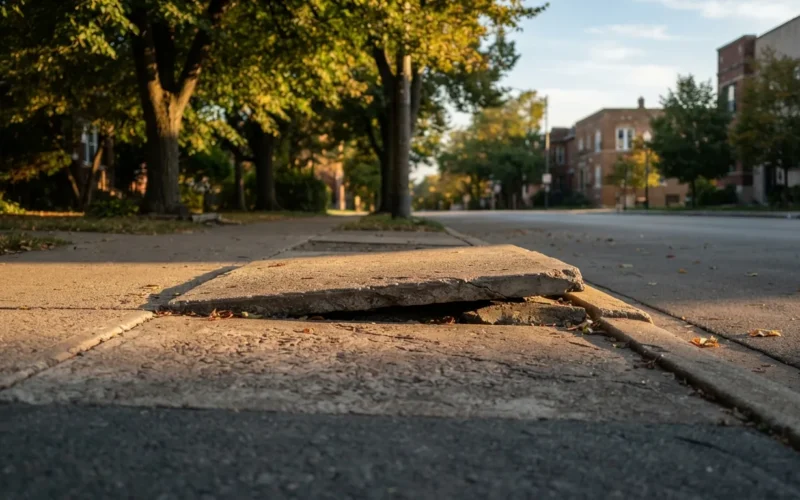
- Inspect your sidewalk a couple of times a year and after winter. Look for raised edges, cracks, and sunken slabs. Our guide to sidewalk trip hazards explains what to look for.
- Mark hazards with bright paint or a cone until they’re fixed.
- Use a licensed contractor and get any permits your city requires.
- Check your insurance. Ask your insurer whether your policy covers sidewalk-related claims.
- Keep records of inspections, repairs, and snow clearing.
If you rent
Leases often say who handles snow removal and sidewalk upkeep. If it isn’t clear, ask your landlord in writing.
How to report a sidewalk hazard
- Use your city’s 311 line, website, or app, if it has one.
- Contact the public works or transportation department directly.
- Include the exact location, a description, and a photo.
- If the hazard is in front of a business, you can also tell the owner or manager.
Sources
- New York City Department of Transportation: Sidewalks: information for property owners
- NYC311: Broken sidewalk