Workplace slips, trips, and falls usually come from a short list of familiar hazards. This guide explains each one and the basic controls that prevent them.
Key takeaways
Key takeaways
– Slips come from too little grip between shoe and floor. Trips happen when your foot hits something and your body keeps moving.
– Spills, wet weather, loose mats, clutter, cords, poor lighting, and the wrong footwear cause most slips and trips at work.
– Fatigue, rushing, and carrying loads that block your view make falls more likely.
– OSHA requires employers to keep walking surfaces clean, orderly, inspected, and free of hazards like spills, snow, and ice.
Slips, trips, and falls: what’s the difference?
These three words get used together, but they describe different things:
- A slip happens when there isn’t enough friction between your shoe and the floor, so your foot slides. Wet, oily, or icy surfaces are the usual culprits.
- A trip happens when your foot strikes an object or a change in height, and your upper body keeps moving forward.
- A fall is what often follows. Many workplace falls happen on the same level, meaning on a flat floor rather than from a height.
This guide focuses on slips, trips, and same-level falls. Falls from ladders, roofs, and other heights have their own rules and equipment.
The most common causes
NIOSH and OSHA point to the same handful of hazards again and again.
Spills and wet surfaces
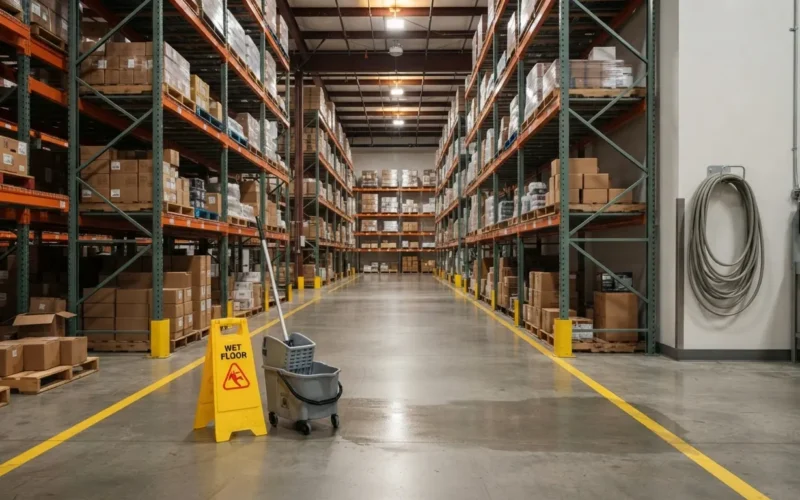
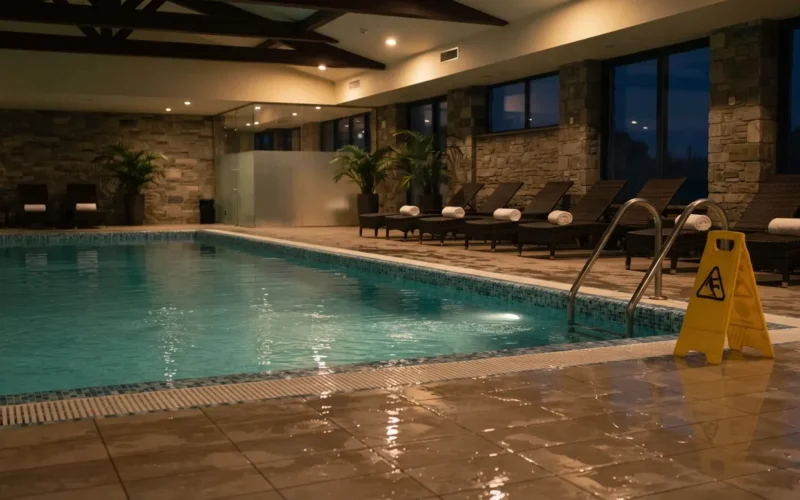
Water, oil, grease, cleaning products, and food can turn a safe floor into a slippery one in seconds. Tasks that involve handling liquids or greasy materials make spills more likely. Our guide to why wet floors cause so many falls explains the science. Kitchens are a special case; see restaurant fall hazards.
Weather tracked indoors
Rain, snow, and ice don’t stay outside. They’re carried in on shoes and equipment, wetting entrances, loading docks, and break areas. Outdoor walkways and parking areas become hazards too.
Loose, curled, or wrinkled mats
Mats help catch water and dirt, but a mat with a curled corner, a wrinkle, or an edge that slides becomes a trip hazard of its own.
Clutter and objects in walkways
Boxes, tools, hoses, pallets, and trash left in aisles are among the most common trip hazards. Open drawers and items stored on stairs count too.
Cords and cables
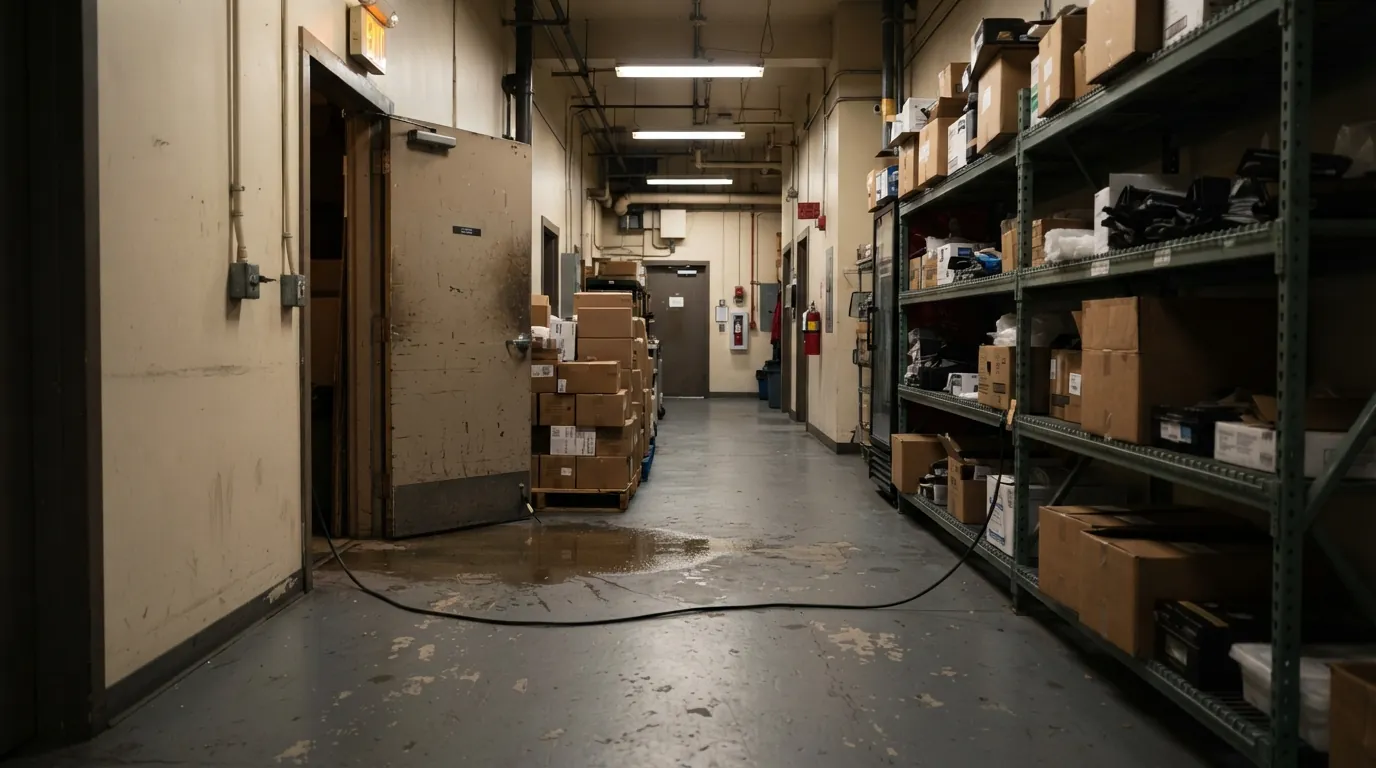
Extension cords and cables stretched across walkways are easy to miss, especially on busy or dim floors.
Uneven surfaces and changes in height
Cracked concrete, damaged flooring, raised thresholds, and transitions between floor types can catch a foot. So can unexpected single steps and ramps.
Poor lighting
Dim stairwells, burned-out bulbs, and glare all make it harder to see hazards. Moving between bright and dark areas, such as from a sunny dock into a warehouse, gives your eyes little time to adjust.
Footwear
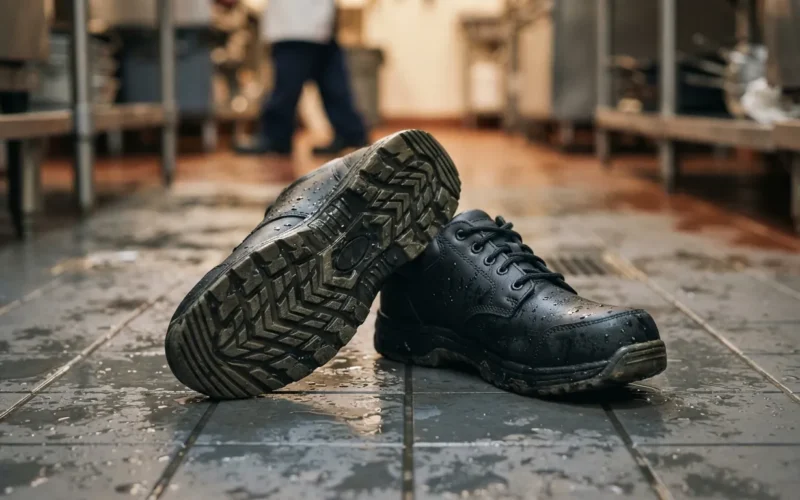
Worn soles, smooth soles, and shoes that are loose or poorly fitted all make slips more likely. Our guide to slip-resistant footwear explains what to look for.
Human factors
Hazards are only part of the story. NIOSH also points to factors that make a fall more likely when a hazard is present:
- Fatigue, which slows reactions and affects balance
- Rushing, especially near shift changes and deadlines
- Carrying loads that block your view of the floor
- Distraction, such as reading while walking
- Age, since balance can decline over time
What OSHA requires
OSHA’s general requirements for walking-working surfaces apply to most workplaces. In plain terms, employers must:
- keep workplaces, passageways, storerooms, and service rooms clean, orderly, and sanitary,
- keep walking surfaces free of hazards such as sharp or protruding objects, loose boards, corrosion, leaks, spills, snow, and ice,
- provide safe ways to get to and from work areas,
- inspect walking surfaces regularly and as needed, and keep them in safe condition, and
- fix or guard hazardous conditions before employees use the surface again.
Some states run their own workplace safety programs with rules that may go further than federal OSHA.
Controls that prevent most slips and trips
- Clean as you go. Make it easy to report and clean spills by keeping supplies close at hand.
- Use the right mats. Choose mats large enough for several steps, and replace any that curl, slide, or wear out.
- Keep aisles clear. Mark walkways, store materials off the floor, and remove trash and packaging promptly.
- Manage cords. Route cords along walls or overhead, or cover them with protectors made for foot traffic.
- Fix the floor. Repair cracks, holes, and loose flooring, and mark changes in level.
- Light it well. Replace bulbs quickly and add lighting to stairs, docks, and transition areas.
- Plan for weather. Add mats at entrances, clear snow and ice early, and inspect more often on wet days.
- Choose suitable footwear for the surfaces and tasks involved.
- Train and encourage reporting. Make it normal to point out hazards and fix them right away.
Our guide to housekeeping habits that prevent falls at work turns these into a daily routine.
If someone falls at work
Get first aid or medical care first. Then report the injury according to your employer’s procedures. Workplace injuries are usually handled through workers’ compensation, which follows its own state-specific rules. Our guide to common slip-and-fall injuries explains which symptoms need care.
Sources
- Occupational Safety and Health Administration (OSHA): 29 CFR 1910.22, Walking-working surfaces: general requirements
- National Institute for Occupational Safety and Health (NIOSH): Preventing slips, trips, and falls in wholesale and retail trade establishments
- National Institute for Occupational Safety and Health (NIOSH): Slip, trip, and fall prevention for healthcare workers