Pool deck slip hazards combine constant water with bare feet. Here’s why pool decks get so slick and what owners, operators, and swimmers can do about it.
Key takeaways
Key takeaways
– Pool decks combine the riskiest conditions for slips: constant water, bare feet, and people who are excited or distracted.
– Smooth or sealed surfaces, algae, sunscreen, and standing water all reduce grip.
– Textured, slip-resistant deck finishes, good drainage, and regular cleaning make the biggest difference.
– Walking, never running, and wearing water shoes with good grip lower the risk for swimmers.
Why pool decks are so slippery
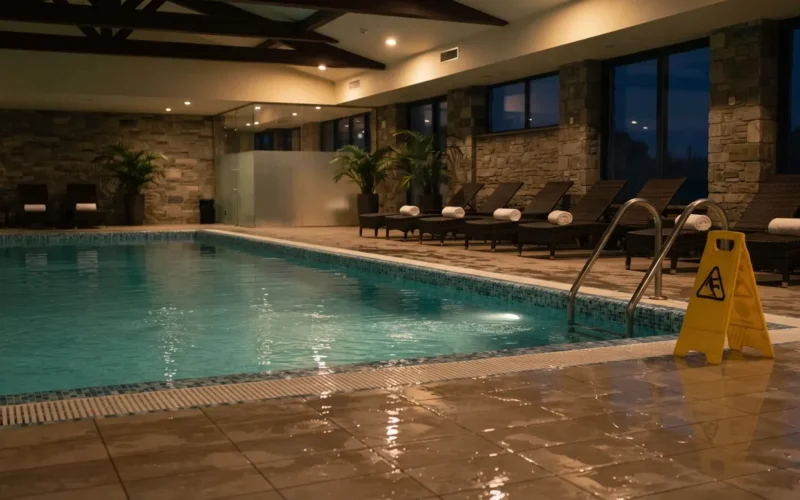
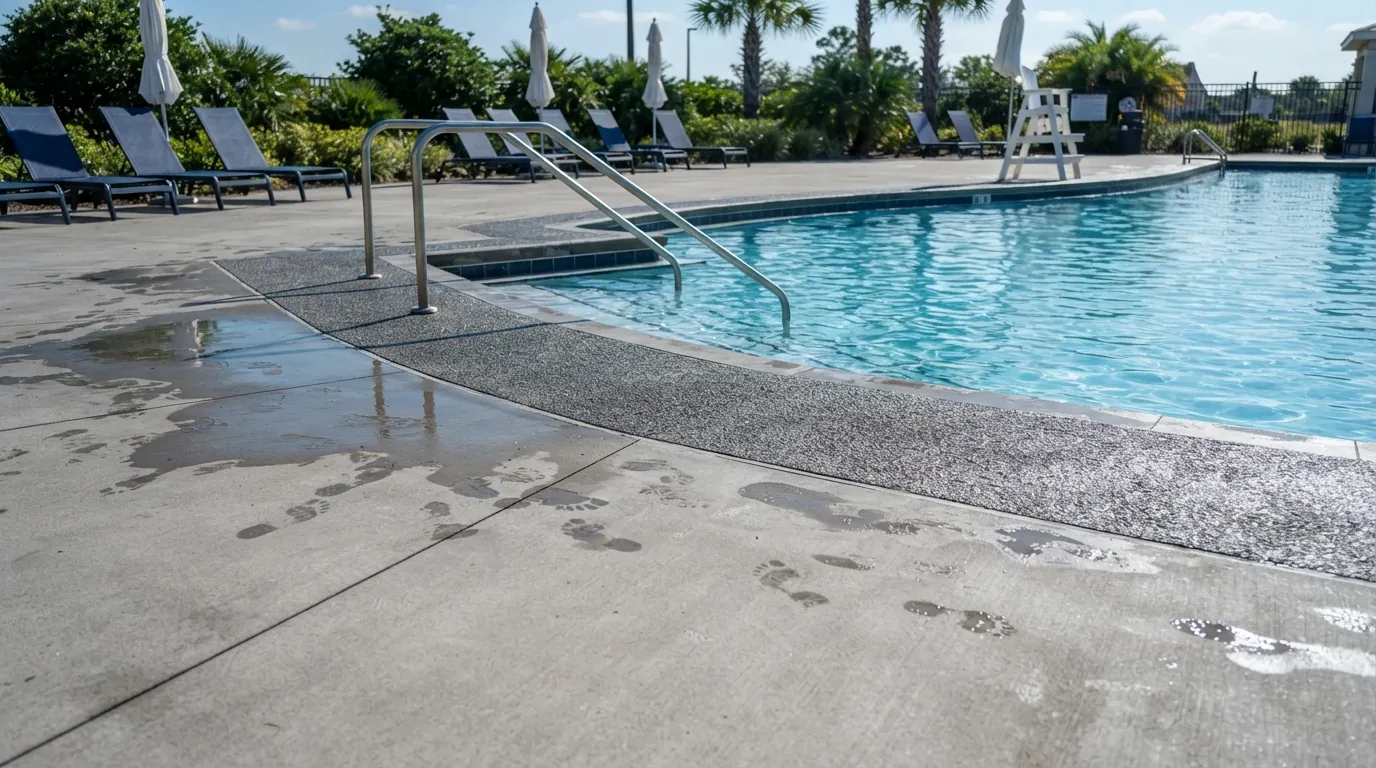
Most slip-resistance guidance assumes people are wearing shoes. Pool decks are different: they’re walked on with bare, wet feet, which have far less grip than a rubber sole. Water is everywhere, splashing from the pool, dripping from swimmers, and pooling where the deck doesn’t drain well.
Add children running, people carrying drinks or towels, and attention focused on the water, and it’s easy to see why pool areas are among the most common places for slips.
What makes a deck more slippery
- Smooth or sealed surfaces. Glossy tile, polished concrete, and heavily sealed pavers can be slick when wet.
- Standing water. Low spots and poor drainage leave puddles that never fully dry.
- Algae and mildew. Shady, damp areas can grow a slimy film.
- Sunscreen and lotion. Oils transferred from skin to the deck reduce grip.
- Worn textures. Slip-resistant finishes and coatings wear down over time.
- Transitions. The edge of the pool, steps, ladders, and the change from grass or concrete to tile are common slip points.
- Spills. Drinks and food near lounge chairs add sticky or slippery patches.
What the codes say
For public pools, CDC’s Model Aquatic Health Code (MAHC) gives health departments model rules for designing and operating aquatic venues. Many states and localities base their pool codes on it. The MAHC calls for pool decks to have slip-resistant, textured finishes that resist slipping under bare feet in wet or dry conditions, and for slip-resistant surfaces on steps and in shallow areas.
Private backyard pools usually aren’t covered by these rules, but the same principles apply.
How pool owners and operators can reduce slips
Choose the right surface
- Use textured, slip-resistant finishes rated for wet, barefoot areas. Our guide to slip resistance ratings explains how surfaces are tested.
- Avoid high-gloss sealers on concrete and pavers, or use sealers with a slip-resistant additive.
- Re-coat or re-texture worn areas before they become smooth.
Manage water
- Make sure decks slope toward drains, and keep drains clear.
- Fix low spots where water collects.
- Squeegee standing water during busy periods.
Keep it clean
- Scrub decks regularly to remove algae, sunscreen residue, and body oils, using cleaners suitable for the surface.
- Pay extra attention to shady, damp areas.
Mark and manage transitions
- Use contrasting edge markings on pool steps so they’re easy to see.
- Make sure ladders and handrails are secure, and have slip-resistant treads.
- Keep the area around steps and ladders clear of chairs, toys, and towels.
Set and enforce simple rules
- No running on the deck.
- Food and drinks in designated areas only, ideally away from the pool edge.
- Keep walkways clear of lounge chairs and bags.
Our pool area safety checklist brings these together.
How swimmers can stay safer
- Walk, don’t run, and take shorter steps on wet surfaces.
- Wear water shoes or sandals with grippy soles between the pool, changing rooms, and lounge areas.
- Use handrails on steps and ladders.
- Watch for shiny or slimy patches, especially in shade.
- Keep your hands free when walking near the pool edge.
- Teach children to walk on pool decks, and remind them often.
If someone falls
Falls on hard, wet decks can cause head injuries, so watch for danger signs such as a worsening headache, vomiting, or confusion. Our guide to common slip-and-fall injuries explains which symptoms need care. Falls near the water also carry a risk of drowning if someone is dazed, so get them away from the edge and check on them.
For hotel pools, water parks, and locker rooms, see falls at hotel pools, water parks, and locker rooms.
Sources
- Centers for Disease Control and Prevention: About the Model Aquatic Health Code
- Oregon Health Authority, Public Pool Program: Slip resistance fact sheet (citing MAHC deck and floor requirements)