Sidewalk trip hazards don’t need to be big to be dangerous. Here’s why small changes in pavement height cause so many trips, and how to spot them early.
Key takeaways
Key takeaways
– It doesn’t take much: a raised edge of a fraction of an inch can catch the toe of a shoe.
– Tree roots, freeze-thaw cycles, settling soil, and utility work are the usual causes of uneven sidewalks.
– Low light, wet leaves, and looking at your phone make sidewalk hazards much harder to see.
– If you spot a hazard, report it to your city or the property owner. Responsibility for repairs varies by location.
Why small height changes cause big trips
When you walk, your foot clears the ground by only a small margin as it swings forward. On a smooth, even sidewalk, that’s plenty. But if one slab sits even slightly higher than the next, the toe of your shoe can catch the raised edge while your body keeps moving forward.
Accessibility standards show how small these differences are. Under the 2010 ADA Standards for Accessible Design, a change in level on an accessible route can be vertical only up to 1/4 inch. Changes between 1/4 inch and 1/2 inch must be beveled, and anything higher than 1/2 inch must be handled with a ramp. These rules were written for wheelchair access, but they’re a useful reminder that even a half-inch lip is a real barrier.
Common sidewalk trip hazards
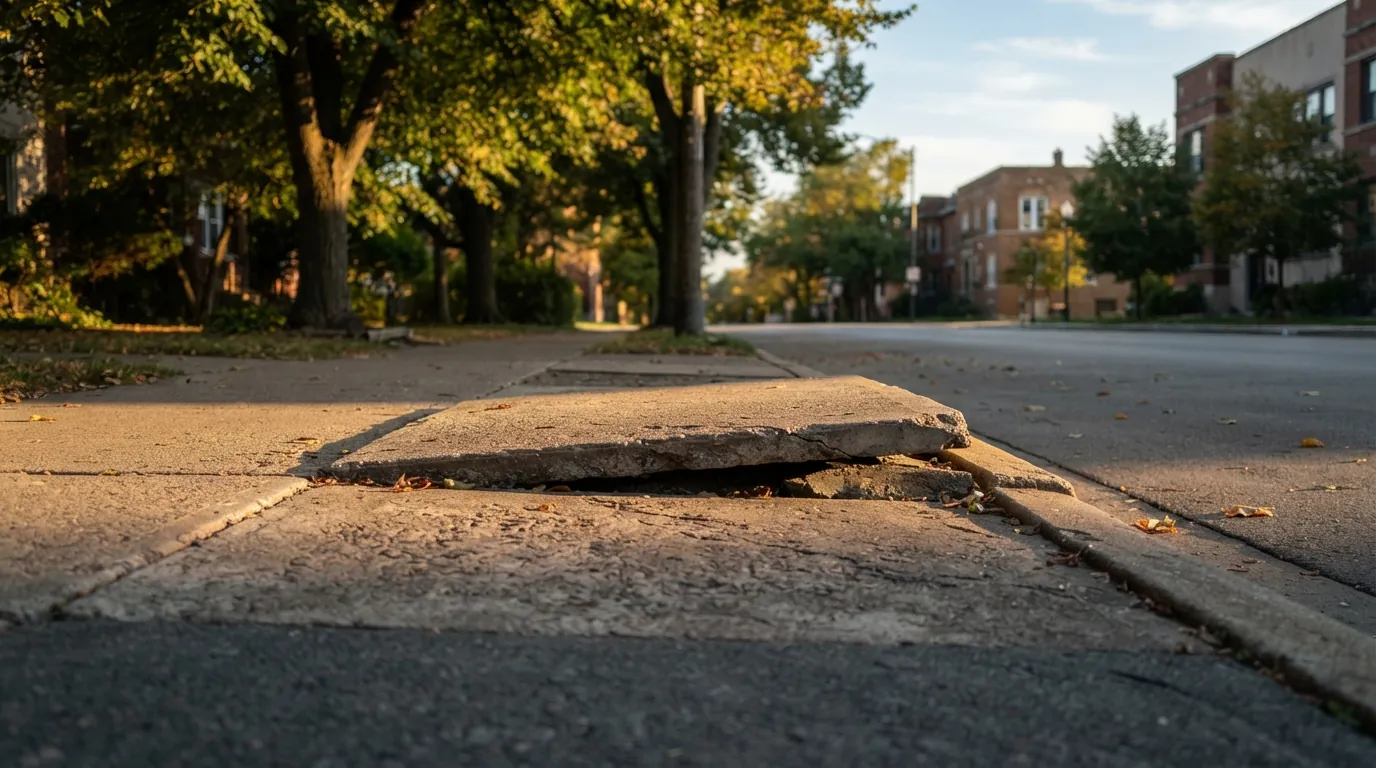
Raised slabs
The most common hazard is one concrete slab sitting higher than the next. The raised edge often catches light at certain angles but disappears in shade or at dusk.
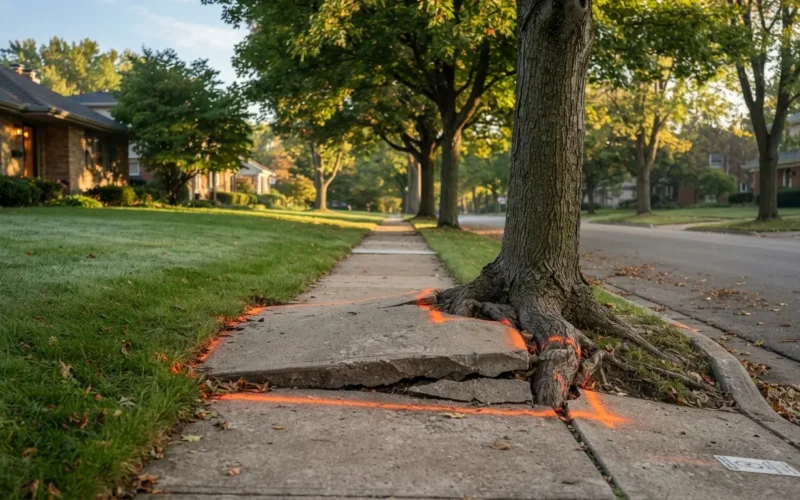
Tree root uplift
Roots of street trees can push slabs up, tilt them, or crack them. Damage usually gets worse slowly, year after year.
Cracks and broken pieces
Cracks can widen into gaps, and broken corners can leave loose chunks or sharp drops.
Sunken or settled sections
Slabs can sink as soil settles or washes out underneath, leaving a dip with a raised edge on the next slab.
Potholes and holes
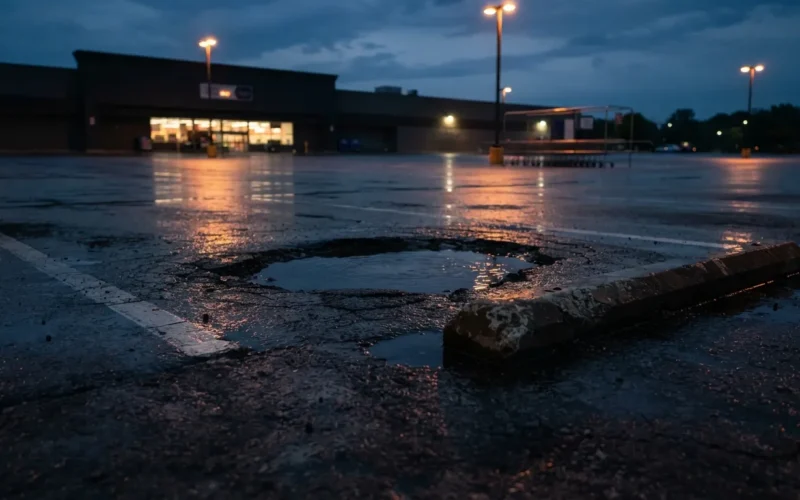
Missing pieces, open utility holes, and damaged drainage grates can catch a foot.
Curbs and transitions
Curb edges, curb ramps that don’t meet the street smoothly, and driveway aprons create changes in height and slope.
Things on the sidewalk
Hoses, garbage bins, signs, scooters, and construction materials can block or narrow the walkway.
What makes them worse
- Low light. Raised edges are hard to see at dawn, dusk, and night, especially under patchy street lighting.
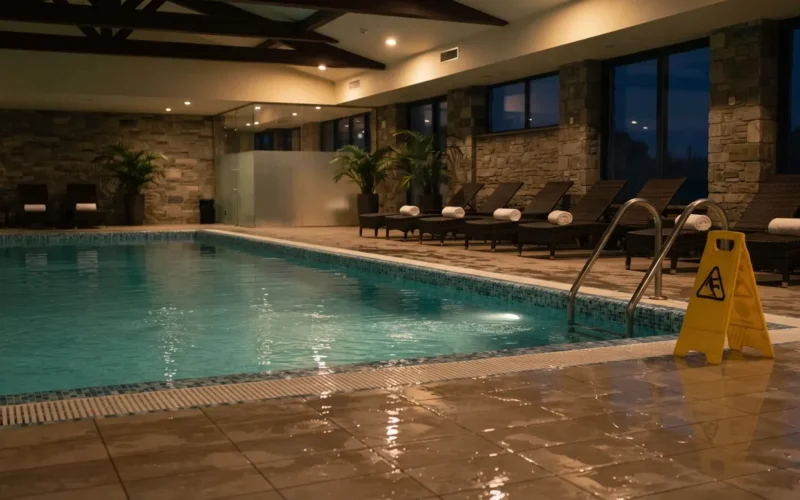
- Weather. Wet leaves, rain, ice, and snow can hide hazards and make surfaces slippery.
- Distraction. Looking at a phone, talking, or watching traffic takes your eyes off the ground.
- Carrying things. Bags, strollers, or boxes can block your view of your feet.
- Footwear. Shoes with a pronounced toe, loose sandals, and high heels are more likely to catch an edge.
How to walk more safely
- Scan the path a few steps ahead, especially where trees line the street.
- Slow down in low light and on unfamiliar routes.
- Put your phone away while walking, or stop to use it.
- Step over raised edges deliberately instead of shuffling.
- Choose well-lit routes at night and carry a small light if needed.
- Wear shoes that fit well and stay on your feet.
What to do about a hazard you spot
Report it. Many cities have a 311 line, an online form, or an app for reporting sidewalk damage. If the hazard is in front of a business or private property, you can also let the owner or manager know.
Mark it, if it’s yours. If you own the property, mark the hazard with bright paint or a cone until it’s repaired, and contact your city about the rules for repairs.
Who fixes it depends on where you are. In some places the city maintains sidewalks; in others, adjacent property owners are responsible for repairs, or the two share the job. Our guide to who maintains the sidewalk explains how this usually works.
Common fixes
Property owners and cities typically use one of these approaches, depending on the damage and local rules:
- Grinding or cutting the raised edge down to a gentle slope
- Patching small holes and cracks
- Mudjacking or foam lifting to raise a sunken slab back to level
- Replacing badly damaged slabs
- Root pruning or root barriers, done with care for the tree’s health and following local tree rules
If you trip on a sidewalk
Check yourself for injuries before getting up. Our guide to common slip-and-fall injuries explains which symptoms need care. If the fall happened on public property, deadlines for reporting can be short, so see what to do after a fall and premises liability basics.
For more outdoor hazards, see our guide to parking lot hazards.